Website Hosting and Maintenance Services: Expert Guide 2026
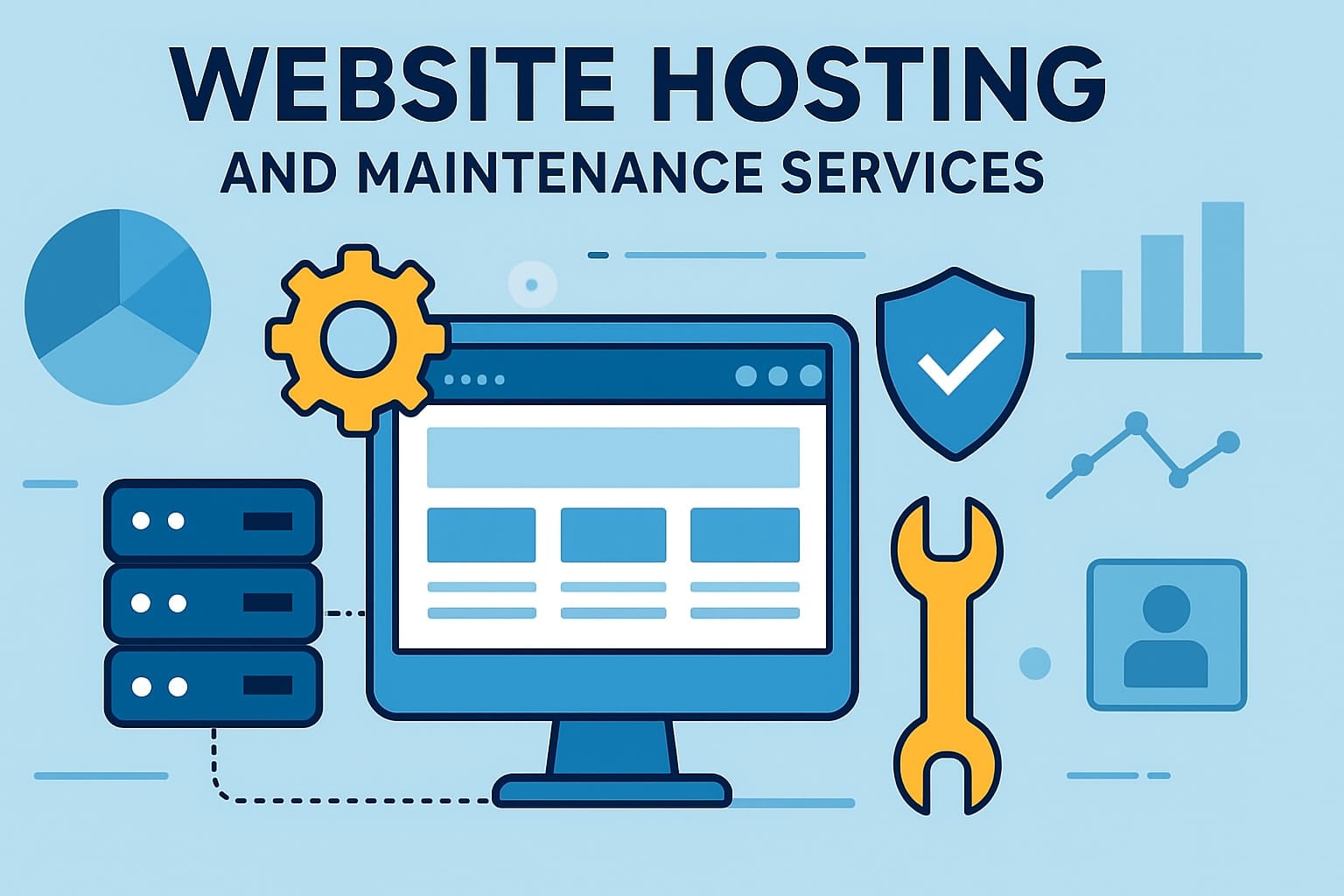
In today’s digital-first business landscape, the performance, security, and reliability of your website are essential. Yet, too many organizations underestimate how much website hosting and maintenance services influence online success.
Neglecting these services can result in costly downtime, security breaches, and lost customer trust. This expert guide to website hosting and maintenance services for 2026 is designed to give you the clarity you need to make confident, future-proof decisions.
You will discover actionable strategies, current trends, and proven best practices for choosing, managing, and optimizing your website. Ready to safeguard your digital presence and unlock new growth? Let’s dive in.
Understanding Website Hosting: Types, Features, and Trends
In the digital age, website hosting and maintenance services form the backbone of every successful online presence. Without reliable hosting, websites risk downtime, poor performance, and lost opportunities. Yet, many business owners underestimate the importance of choosing the right hosting partner. Understanding the fundamentals is the first step to building a resilient and high-performing website.
The Basics of Website Hosting
Website hosting and maintenance services provide the infrastructure that keeps your website accessible online. A hosting provider stores your site’s files on servers, ensuring visitors can reach your pages anytime.
Reliable hosting is vital for uptime and user experience. If your site is often down or slow, visitors will quickly leave. A common misconception is that all hosting is the same, but differences in quality, features, and support can have a major impact on your business.
Types of Hosting Services Explained
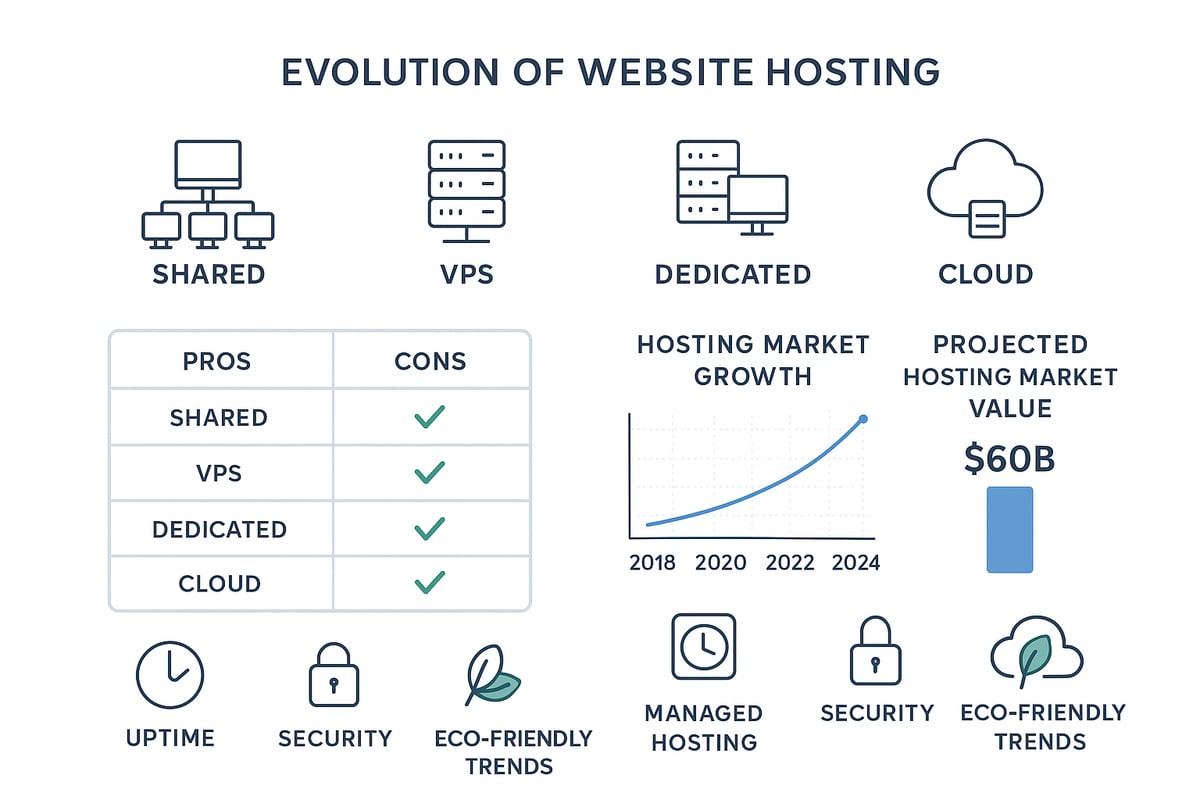
There are four main types of hosting: shared, VPS, dedicated, and cloud. Shared hosting is the most affordable, but resources are split among multiple sites. VPS hosting offers more control and resources, while dedicated hosting gives you an entire server for maximum performance. Cloud hosting is scalable and highly reliable, making it ideal for growing businesses.
Each website has unique needs. For example, e-commerce sites often require more resources than informational websites. To explore more about these options, see the Website Hosting Services Overview.
| Hosting Type | Pros | Cons |
|---|---|---|
| Shared | Low cost, easy setup | Limited resources |
| VPS | More control, scalable | Higher cost |
| Dedicated | Full resources, secure | Expensive, complex |
| Cloud | Flexible, reliable | Variable pricing |
Essential Hosting Features in 2026
When comparing website hosting and maintenance services, focus on features that ensure smooth operation. Uptime guarantees, sufficient bandwidth, and flexible storage are must-haves for modern sites. Scalability allows your hosting to grow with your business.
Security features like SSL certificates, firewalls, and DDoS protection are critical for safeguarding data. Looking ahead, eco-friendly hosting is gaining traction as companies seek to reduce their carbon footprint. Green hosting providers use renewable energy and promote sustainability.
The Rise of Managed Hosting Solutions
Managed hosting is transforming website hosting and maintenance services, especially for small businesses and non-technical users. With managed hosting, the provider handles server management, software updates, and security monitoring, freeing you to focus on your core business.
This approach minimizes technical headaches and reduces downtime. Managed WordPress hosting, for example, has become popular due to its hands-off maintenance and optimized performance.
Hosting Market Trends and Statistics
The website hosting market is expanding rapidly, driven by cloud and hybrid hosting solutions. By 2026, the global market is projected to reach hundreds of billions, reflecting increased digital adoption. Demand for localized data centers is also rising, as businesses seek compliance with data privacy regulations and faster load times for local users.
Cloud hosting and AI-driven management are reshaping the industry, offering greater efficiency and smarter resource allocation. Staying aware of these trends helps you make informed decisions for the future.
The Importance of Website Maintenance: What, Why, and How
Website hosting and maintenance services are the foundation for a robust digital presence. Maintenance is more than a technical chore; it is a continuous process that protects your investment and ensures your website remains reliable, secure, and high-performing.
What is Website Maintenance?
At its core, website maintenance refers to the ongoing process of updating, monitoring, and improving your site’s performance, security, and content. This process goes beyond one-time fixes and involves a consistent schedule of tasks that keep your website running smoothly.
Businesses that prioritize website hosting and maintenance services enjoy fewer disruptions and improved user experiences. Maintenance also covers updates, backups, and security enhancements, ensuring your site adapts as technologies and threats evolve.
Core Maintenance Tasks Every Website Needs
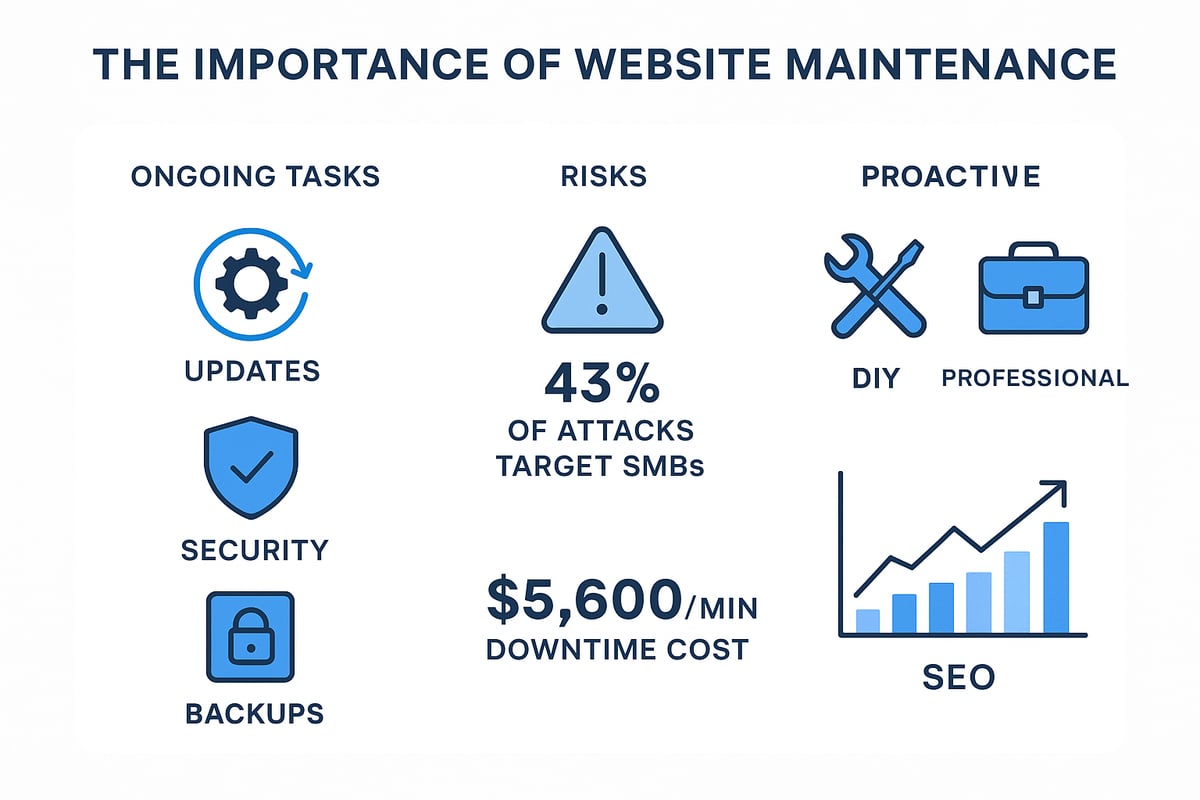
A reliable maintenance plan includes several essential tasks. These range from regular software and plugin updates to robust security monitoring and frequent data backups. Disaster recovery planning is also vital to minimize downtime in the event of an incident.
Content updates and ongoing SEO checks are equally important for visibility and engagement. For a deeper dive into essential maintenance activities, see this Importance of regular website maintenance tasks resource. Consistent website hosting and maintenance services help ensure your site remains secure, compliant, and relevant.
Risks of Neglecting Maintenance
Neglecting website hosting and maintenance services can have serious consequences. Security vulnerabilities are a major concern, with 43% of cyberattacks targeting small and midsize businesses. Downtime is costly, with average losses reaching $5,600 per minute according to Gartner.
Outdated websites also risk losing search engine rankings and customer trust. Regular maintenance is not just best practice, it is essential for protecting your digital assets and brand reputation.
Proactive Maintenance Strategies for 2026
Modern website hosting and maintenance services increasingly rely on automation and AI-driven solutions. Tools now automate updates, monitor security, and alert you to issues in real time. Scheduled maintenance windows minimize disruptions, keeping your website accessible to users.
Predictive maintenance powered by artificial intelligence can identify potential issues before they escalate. Adopting these strategies in 2026 will keep your site ahead of threats and performance challenges.
Maintenance Service Models: DIY vs. Professional
When it comes to website hosting and maintenance services, you have options. Some businesses manage maintenance in-house, which can save costs but requires technical expertise and dedicated resources. Others choose to outsource to professionals, gaining access to specialized skills and proactive support.
The right model depends on your business size, budget, and internal capabilities. Assess your needs carefully to choose the most effective approach for your website’s ongoing health.
Step-by-Step Guide: Choosing the Right Hosting and Maintenance Provider
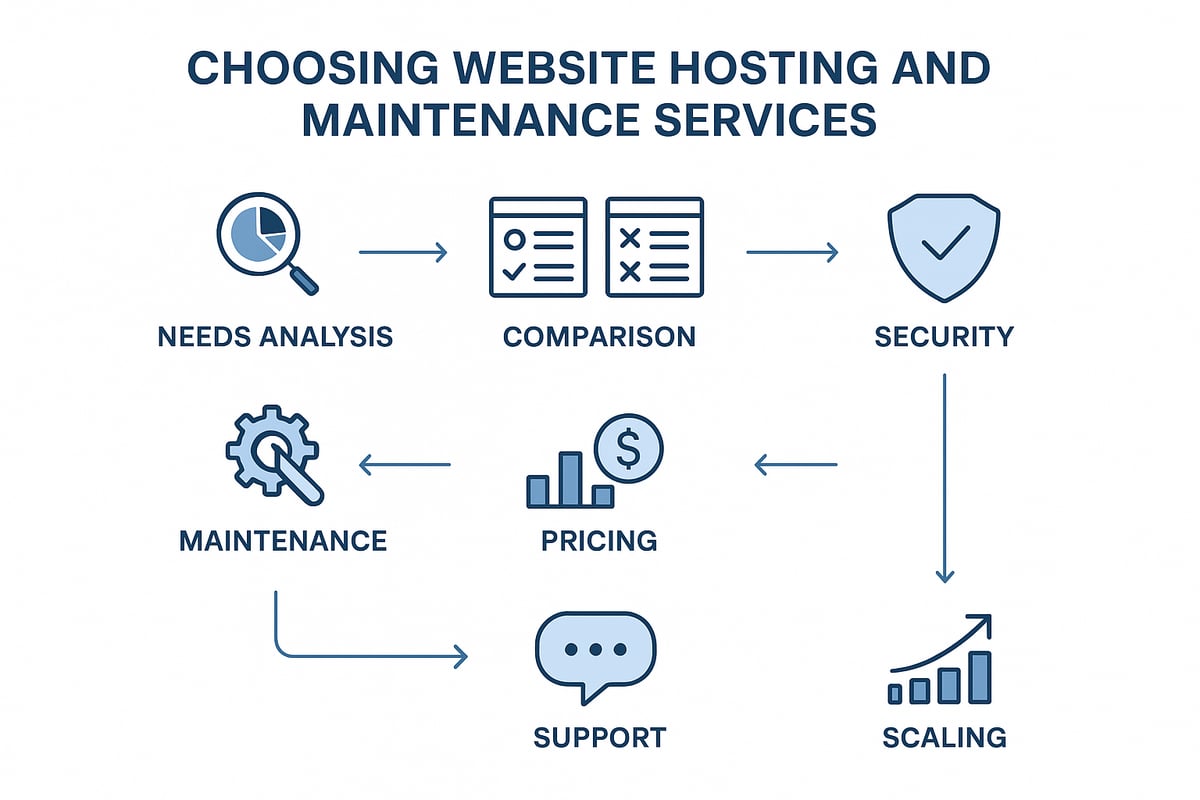
Selecting the best website hosting and maintenance services is a pivotal decision for your online presence. This seven-step guide will help you make a confident, future-ready choice.
Step 1: Assess Your Website’s Needs
Begin by defining what your site requires from website hosting and maintenance services. Consider your current and projected traffic, technical features, and future growth. E-commerce stores, membership portals, and multimedia-heavy sites often need more robust resources. Outline your must-have features and nice-to-have extras, as this clarity will shape your provider shortlist.
Step 2: Evaluate Hosting Options
Compare different hosting types, such as shared, VPS, dedicated, and cloud. Each has unique pros and cons:
| Hosting Type | Pros | Cons | Best For |
|---|---|---|---|
| Shared | Cost-effective | Limited resources | Small sites |
| VPS | Scalable | More expensive | Growing businesses |
| Dedicated | Full control | High cost | Large, complex sites |
| Cloud | Flexible | Variable pricing | Sites with traffic spikes |
Look for uptime guarantees, customer reviews, and transparent SLAs. Prioritize providers with proven reliability and scalability.
Step 3: Scrutinize Security and Compliance
Security is non-negotiable for website hosting and maintenance services. Ensure your provider adheres to data privacy regulations like GDPR or CCPA. Verify their security certifications and protocols, such as SSL, firewalls, and advanced monitoring. Ask about the provider’s approach to vulnerability management and incident response.
Step 4: Analyze Maintenance Offerings
Review what maintenance is included. Does the provider handle software updates, backups, security patching, and proactive monitoring? Evaluate their support responsiveness and escalation procedures. For a deeper look at professional options, explore Security and Maintenance Solutions to understand the range of services available for ongoing protection and performance.
Step 5: Compare Pricing Models and Contracts
Examine whether pricing is pay-as-you-go or fixed package. Watch for hidden fees or sharp renewal increases. Assess contract terms, cancellation policies, and upgrade paths. A transparent cost structure is essential when choosing website hosting and maintenance services. Use comparison tables to weigh the total value, not just the headline price.
Step 6: Test Support and Service Quality
Test each provider’s support before committing. Top-tier website hosting and maintenance services offer 24/7 assistance through live chat, phone, and ticketing. Check response time benchmarks and availability. Responsive support can make a significant difference during urgent issues or planned upgrades.
Step 7: Plan for Migration and Scaling
Ensure your chosen provider offers migration support and can minimize downtime during the transition. Look for easy upgrade paths and flexible resource allocation to accommodate future growth. Reliable website hosting and maintenance services should help you scale seamlessly as your business evolves.
Key Features to Look for in 2026 Hosting & Maintenance Services
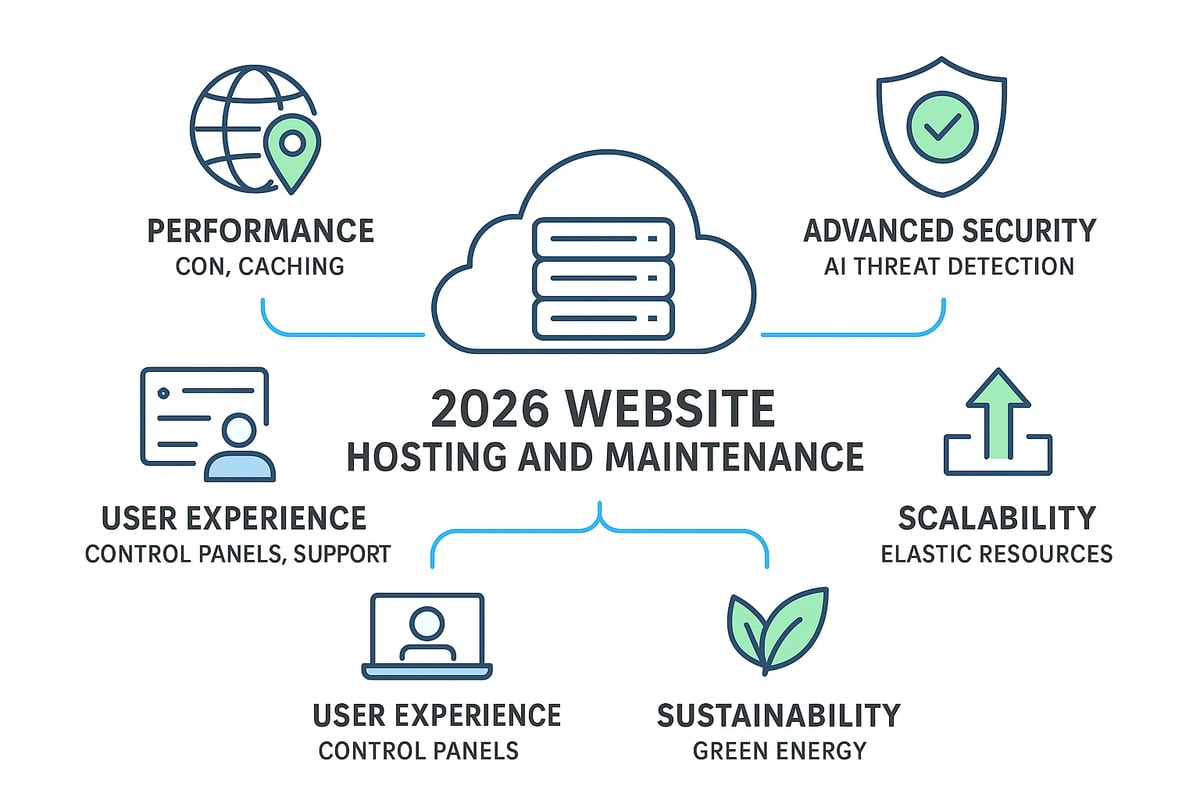
Choosing the right website hosting and maintenance services is essential for future-proofing your online presence. As technology advances, the must-have features in 2026 focus on performance, security, automation, scalability, user experience, and sustainability. Let’s explore what sets the best providers apart.
Performance Optimization Tools
Speed and reliability are non-negotiable for modern websites. The best website hosting and maintenance services include features like CDN integration, advanced caching, and image optimization. These tools ensure your site loads quickly, regardless of user location.
- CDN integration reduces latency
- Caching stores frequently accessed data
- Image optimization improves load times
Sites leveraging CDNs can load up to 50% faster. For a deeper dive, see Optimizing Site Speed with Hosting. Fast-loading sites create better user experiences and support higher SEO rankings.
Advanced Security Measures
Cyber threats are evolving, so robust security is mandatory. Leading website hosting and maintenance services now deploy AI-powered threat detection, multi-factor authentication, and zero-trust architectures. These proactive defenses help block attacks before they impact your business.
- AI-driven threat monitoring
- Multi-factor authentication for admin access
- Zero-trust policies for sensitive data
Explore how AI-driven management is transforming web hosting for enhanced security and operational efficiency.
Automation and Monitoring Capabilities
Automation is a cornerstone of efficient website hosting and maintenance services. Automated backups, uptime monitoring, and instant alerts reduce manual workloads and prevent costly errors. Real-time dashboards provide transparency into site health and performance.
- Automated daily backups
- Uptime and downtime alerts
- Performance dashboards for quick insights
These capabilities enable teams to focus on growth rather than routine site management.
Scalability and Flexibility
Your website needs may change as your business grows. Website hosting and maintenance services must offer elastic resources that scale with traffic spikes, modular add-ons, and pay-as-you-grow pricing. This flexibility supports both startups and established enterprises.
- Elastic server capacity
- Easy upgrade paths
- Modular service options
Scalable solutions ensure your site remains responsive and cost-effective year-round.
User Experience and Support
Intuitive management tools and responsive support define high-quality website hosting and maintenance services. Look for user-friendly control panels, self-service portals, and dedicated account managers for business continuity.
- Simple dashboards
- 24/7 support channels
- Personalized service for business clients
Exceptional support minimizes downtime and builds long-term trust with clients.
Sustainability and Green Hosting
Sustainability is a growing concern for businesses and consumers. Top website hosting and maintenance services use renewable energy, carbon offset programs, and eco-friendly infrastructure. Green hosting providers attract environmentally conscious brands.
- Data centers powered by renewables
- Carbon offset initiatives
- Eco-certifications
Choosing a sustainable provider aligns your digital presence with broader corporate social responsibility goals.
How to Optimize Your Website for Maximum Uptime and Security
Maximizing uptime and security starts with a proactive approach. Whether you run a small business site or a high-traffic e-commerce platform, optimizing your website hosting and maintenance services is essential for reliability and peace of mind.
Regular Performance Audits
Routine performance audits are the backbone of dependable website hosting and maintenance services. Use monitoring tools like Google PageSpeed Insights, GTmetrix, or Pingdom to track load times and server response.
| Tool | Key Feature | Benefit |
|---|---|---|
| PageSpeed | Load speed scoring | Mobile optimization |
| GTmetrix | Waterfall analysis | Detailed diagnostics |
| Pingdom | Uptime monitoring | Real-time alerts |
Identify bottlenecks and address them before they impact your users. Regular audits help you catch slowdowns early, ensuring your site stays responsive and competitive.
Implementing Robust Backup Strategies
A solid backup plan is critical for safeguarding your data. Schedule both full and incremental backups to protect your website from accidental loss or cyberattacks.
Consider using offsite or cloud storage for redundancy and faster recovery. For a deeper dive into this topic, see Why Should I Back Up My Site for expert advice tailored to your needs.
Always test your backups regularly to confirm they work when you need them most.
Keeping Software and Plugins Updated
Outdated software is a leading cause of security breaches. Staying current with core updates, plugins, and themes is a cornerstone of website hosting and maintenance services.
Automate updates where possible, but supplement with manual checks for compatibility. Remember, 52% of breaches stem from unpatched vulnerabilities, making diligence in this area non-negotiable.
Security Best Practices for 2026
Modern security starts with SSL/TLS certificates for encrypted data transmission. Web Application Firewalls (WAF) and DDoS mitigation services add an extra layer of defense, safeguarding your website hosting and maintenance services from evolving threats.
Multi-factor authentication and regular vulnerability scans should be standard. For instance, a business that enabled automated patching and real-time monitoring reduced its incident response time by 60 percent.
Monitoring and Incident Response Planning
Continuous monitoring ensures you are alerted instantly to downtime or suspicious activity. Use real-time dashboards and automated alerts to stay ahead of issues.
Develop a comprehensive disaster recovery plan. Regularly test your incident response strategy so your team can act quickly if a breach occurs. By integrating these steps, your website hosting and maintenance services remain resilient and prepared for any challenge.
As we’ve explored, choosing the right website hosting and maintenance partner is crucial for keeping your digital presence secure, high-performing, and ready for the future. With Selectrum Communications, you’re not just getting technical solutions—you’re gaining a team that understands your brand’s unique needs and is dedicated to your ongoing success. If you’re ready to elevate your website and benefit from expert support, proactive security, and tailored guidance, I encourage you to take the next step.