Web and Website Versus: Key Differences Explained 2026
In today’s digital-first landscape, the lines between web and website often blur, leaving many businesses and individuals uncertain about their unique meanings. As we move into 2026, understanding the distinction between web and website is more crucial than ever for anyone navigating the online world.
This article aims to demystify these terms by breaking down their definitions, core functions, technical structures, and user experiences. You’ll discover why knowing the difference matters for brands, users, and developers, and how this clarity can lead to smarter digital choices and greater online success.
Ready to make sense of web and website? Let’s dive in and empower your next digital decision.
Defining the Web and Website: Foundations Explained
Understanding the distinction between web and website is essential for anyone navigating the digital landscape. While these terms are closely related, each plays a unique role in how we access, share, and interact with information online.
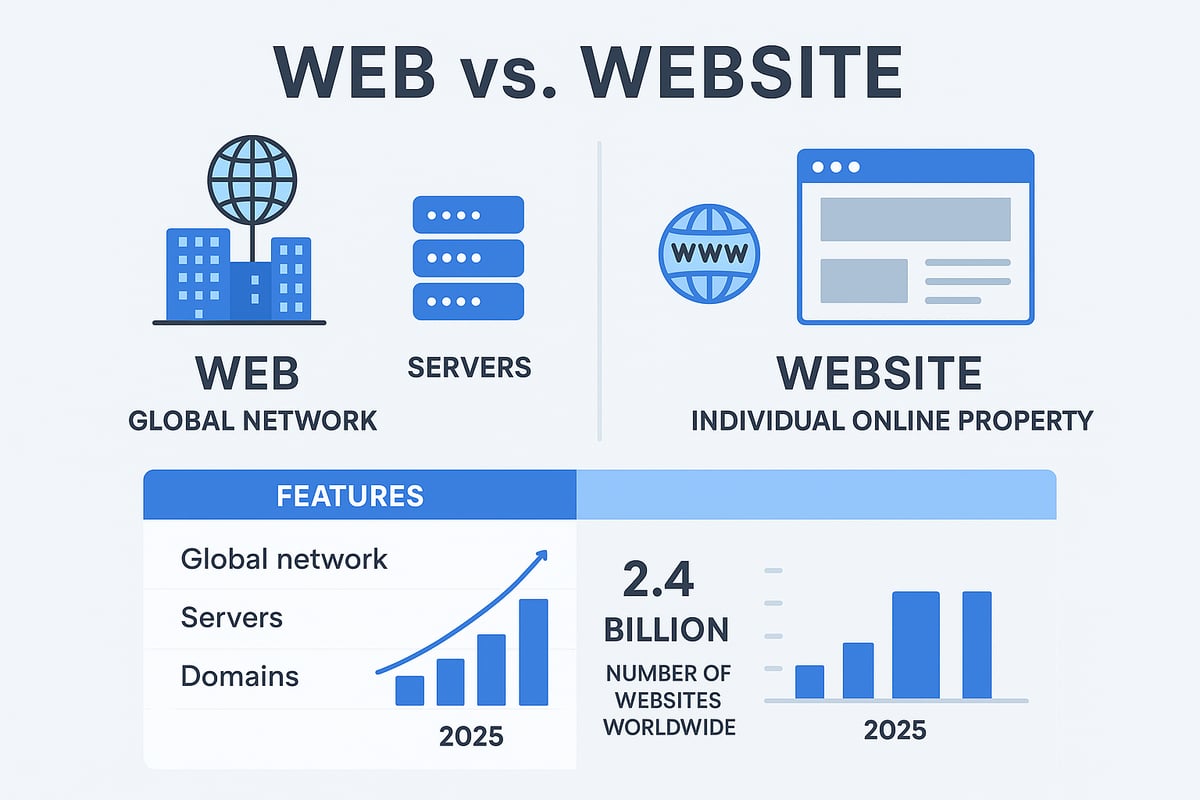
What is the Web?
The web is a vast, interconnected network of digital resources that spans the globe. Unlike the internet, which refers to the underlying infrastructure of cables and servers, the web is the layer of content and services we use daily. It began with simple, static pages but has evolved into a dynamic space filled with interactive applications, media, and communities.
Key elements of the web include browsers, search engines, and countless websites. As of 2025, there are over 1.2 billion websites globally, highlighting just how expansive the web and website ecosystem has become.
What is a Website?
A website is a collection of interrelated web pages grouped under a single domain name. Each website typically contains a homepage, navigation menus, content pages, multimedia elements, and backend systems for management. Websites can be static, delivering fixed information, or dynamic, updating content in real time to engage users.
The web and website concepts are closely linked, as websites serve as the primary way brands communicate, sell, and interact with customers. Common website types include e-commerce platforms, informational sites, and digital portfolios.
- Components of a typical website:
- Homepage
- Navigation bar
- Content and media
- Backend/database
Relationship Between Web and Website
Websites act as the building blocks of the web, each accessible through a browser and a unique URL. Think of the web as a bustling city, with each website representing an individual building or address. Domains and reliable hosting are essential for any website to have a visible presence within the web and website landscape.
Accessing a website involves navigating the web using browsers and search engines, connecting users to specific destinations. This relationship is vital, as websites rely on the broader web infrastructure to reach audiences, while the web itself is composed of millions of interconnected websites.
Technical Structure: How Web and Website Differ Behind the Scenes
Understanding the technical structure of the web and website is crucial for anyone looking to build, manage, or optimize their digital presence. While these terms are often linked, their architectures and underlying technologies serve distinct roles within the online ecosystem.
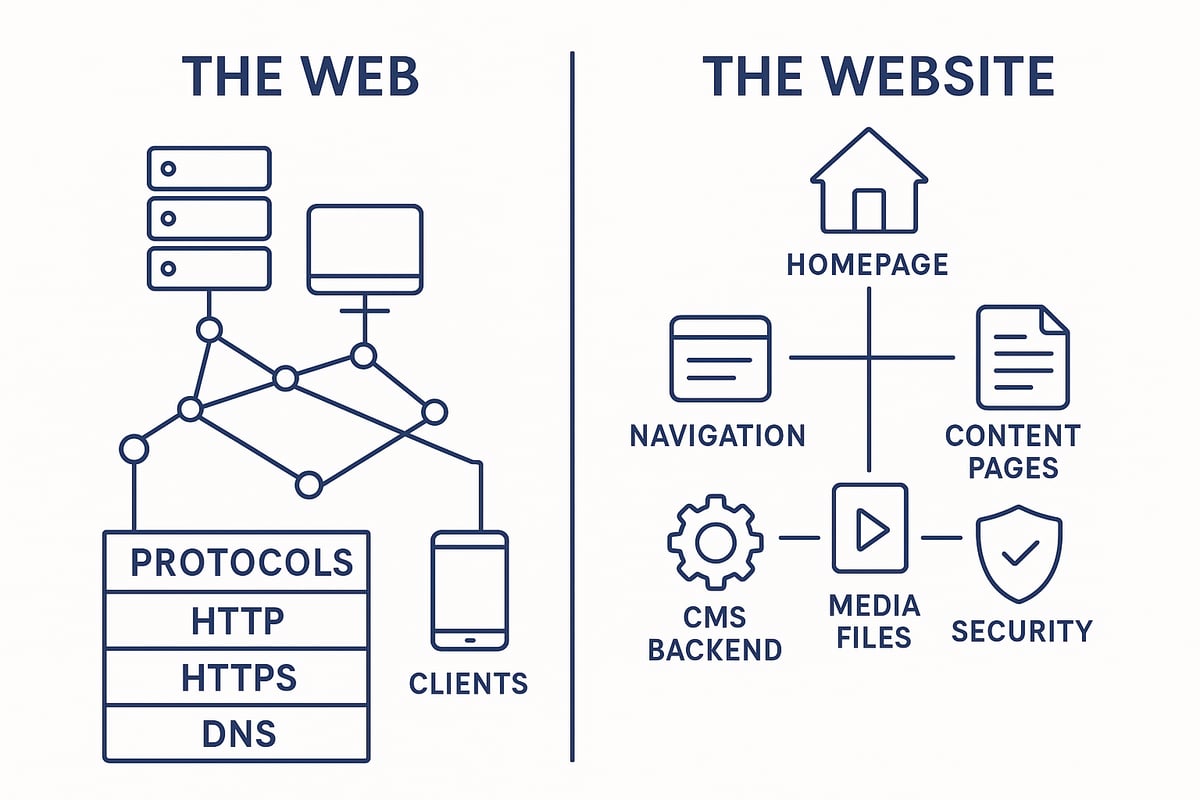
Core Architecture of the Web
At its foundation, the web operates as a distributed system built on protocols, standards, and a vast network of servers and clients. Key protocols like HTTP and HTTPS enable data transfer, TCP IP ensures packet delivery, and DNS translates domain names to IP addresses.
Web standards such as HTML, CSS, and JavaScript define how content is structured, styled, and made interactive. APIs further expand functionality, making the web interoperable across devices and platforms.
When you enter a URL into your browser, the process involves DNS resolution, server communication, and content rendering. For example:
GET /index.html HTTP/1.1
Host: example.com
This request retrieves the homepage, which the browser then displays. The web and website together ensure that content is accessible to users, regardless of device or location.
Website Architecture and Components
A website, as a subset of the web, consists of interconnected web pages, each housed under a single domain. The architecture includes navigation menus, content pages, media assets, and often a backend system for data management.
Files are organized as HTML documents, stylesheets, scripts, and images. Backend components may include databases, content management systems (CMS), and server-side scripts. Security is a priority, with SSL certificates and authentication protocols protecting user data.
For example, an e-commerce website features product listings, a shopping cart, and checkout functionality. Most modern websites rely on CMS platforms for streamlined management. If you're considering options, learn more about Why choose WordPress for your website, as it powers a significant percentage of sites globally.
Key Differences in Development and Maintenance
Developing a website involves designing, coding, testing, and deploying a set of interconnected pages. In contrast, web development is a broader discipline, encompassing not just websites but also web applications, APIs, and online services.
Maintenance tasks differ as well. Websites require regular updates to content and security, while web infrastructure may need protocol upgrades or server optimization. Notably, the majority of modern websites use CMS solutions, which simplify ongoing maintenance and content updates.
Custom websites offer flexibility and unique branding, while template-based sites accelerate deployment but may limit design options. Understanding the technical distinctions between web and website is essential for making informed development and business decisions.
Functionality and User Experience: Comparing Purposes and Interactions
In today's digital landscape, understanding the functionality and user experience of the web and website is essential. Both play crucial roles, but their purposes, interactions, and management offer distinct advantages for users and businesses.
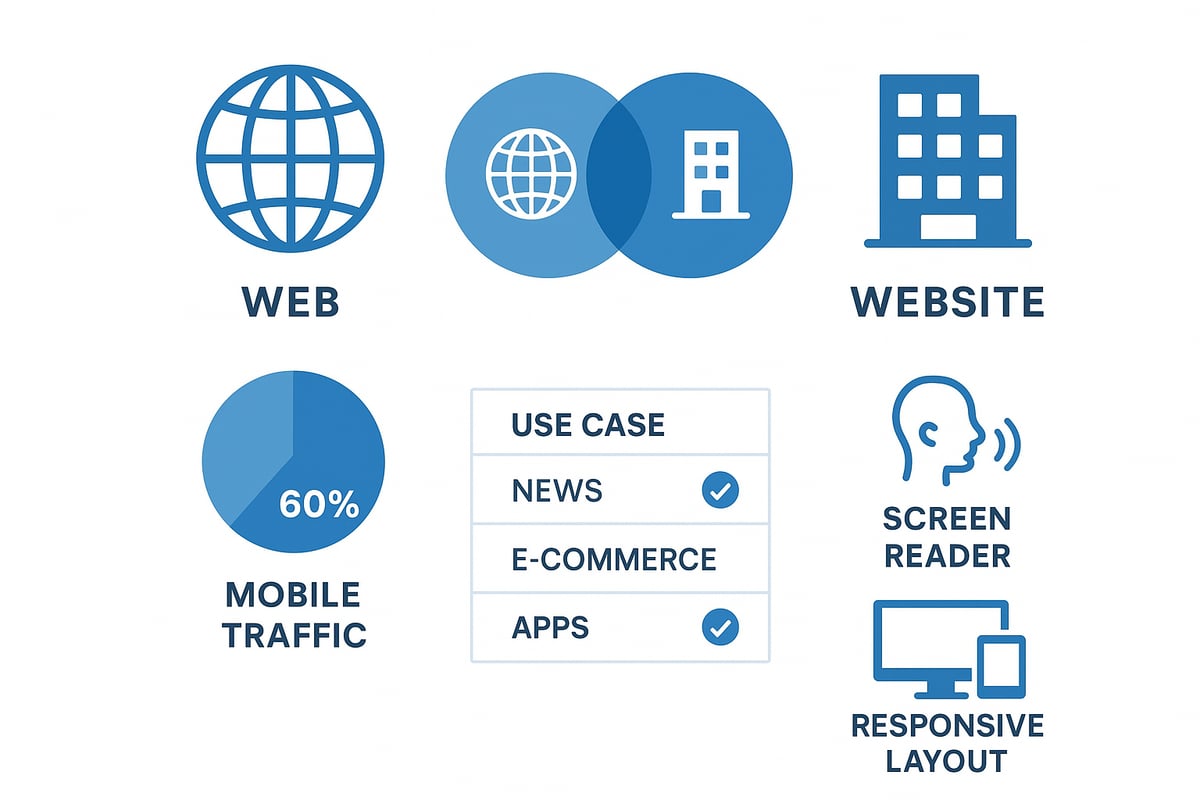
Purpose and Use Cases
The web and website serve different, yet interconnected, functions in the digital ecosystem. The web acts as a gateway, providing access to a vast range of resources, services, and information. This includes everything from news articles to social media, e-commerce, and cloud-based applications.
A website, on the other hand, is designed to deliver specific content or services under a unique domain. For example, informational websites share company details, while e-commerce sites enable online shopping. Web applications provide interactive tools such as online banking or SaaS dashboards.
Mobile usage is now dominant, with 60% of global web traffic coming from mobile devices in 2025. This shift has influenced how the web and website are designed and accessed.
| Use Case | Web | Website |
|---|---|---|
| News & Media | Aggregation, search | News portals, blogs |
| Social Interaction | Social platforms, forums | Company communities |
| E-Commerce | Marketplaces | Online stores |
| Applications | Web apps | SaaS dashboards |
Understanding these distinctions empowers brands to align their digital strategies for maximum impact.
User Interaction and Accessibility
User interaction is a defining aspect of both the web and website. The web enables users to access resources through browsers, search engines, and links. Navigation is often broad, connecting diverse content across multiple domains.
A website, however, offers structured navigation, with menus, search bars, and interactive elements designed for ease of use. Accessibility is a top priority; features like responsive layouts, alt text, and ARIA labels ensure content is usable for everyone. For example, a user may find a website through a web search, then interact with its homepage via clear menus and accessible content.
Designing for modern displays and diverse devices is vital. For insights on optimizing user experience, especially on high-resolution screens, explore website design for retina displays.
Prioritizing accessibility and usability helps both the web and website reach a wider audience.
Content Management and Updates
The web and website are in a constant state of evolution, but their management approaches differ. The web as a whole is dynamic, growing with new resources and sites appearing daily. This fluidity ensures users always have fresh content and diverse experiences.
A website’s content is typically managed through a CMS, manual updates, or automated feeds. Website owners can publish static pages or dynamic content, including multimedia and interactive forms. Real-time updates are common, especially for news portals that refresh articles frequently.
SEO plays a critical role in how both the web and website are discovered. Elements like meta tags, structured data, and keyword optimization influence ranking in search results.
<meta name="description" content="Learn the differences between the web and website for better digital strategy.">
By maintaining updated, relevant content, businesses ensure their web and website presence stays competitive and visible. The web and website, when managed strategically, drive engagement and support organizational goals.
Security, Privacy, and Ownership: Critical Distinctions in 2026
Navigating the digital landscape in 2026 means understanding the unique security, privacy, and ownership challenges that both the web and website present. For businesses and individuals alike, recognizing these distinctions is essential for building trust, protecting data, and maintaining control online.
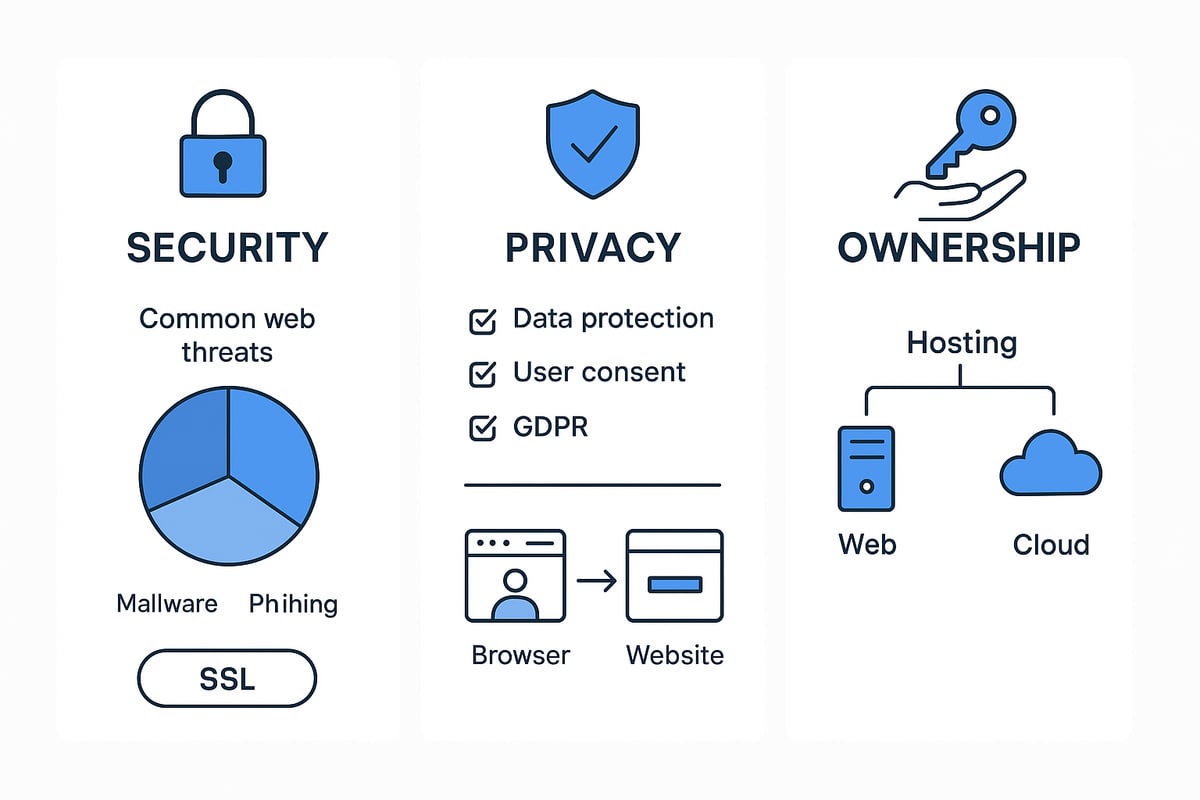
Security Considerations
Security remains a top priority when discussing the web and website. The open nature of the web means varying levels of protection across sites, making users more vulnerable to cyber threats. In contrast, website owners are directly responsible for implementing security measures like SSL certificates, user data encryption, and firewalls.
Common security threats include:
- Phishing attacks
- Malware distribution
- DDoS (Distributed Denial of Service) attacks
Websites, especially those handling transactions or user data, must adopt robust protocols. For instance, e-commerce platforms require advanced authentication and payment security. Site owners often turn to professional services for security and maintenance to safeguard their online assets. As the web and website ecosystem grows, proactive defense strategies become indispensable.
| Aspect | The Web | Website Owner Responsibility |
|---|---|---|
| Security Level | Variable | Directly managed |
| Threat Exposure | Broad | Targeted |
| Protection Tools | Browser-based | SSL, firewalls, access controls |
Privacy and Data Handling
Privacy concerns on the web and website are evolving rapidly. While the web facilitates the flow of information between countless sites and services, individual websites are tasked with collecting, storing, and managing user data.
Website owners must clearly communicate their privacy policies and obtain consent for cookies and data collection. Compliance with regulations such as GDPR and CCPA is mandatory, and new privacy laws continue to emerge in 2026. This means websites must have transparent data practices, secure storage, and clear user controls.
For example, a membership site processes registration data, stores personal details, and manages user preferences. On the broader web, data may pass through third-party services, increasing the risk of exposure. Prioritizing privacy is crucial for both the web and website to maintain user trust.
Ownership and Control
Ownership and control mark a significant distinction between the web and website. The web is a decentralized network with no single owner, governed by organizations like W3C and IETF that set standards and protocols.
In contrast, each website is owned and managed by an individual, business, or institution. This ownership extends to decisions about content, branding, and technical infrastructure. Website owners choose their hosting solutions, ranging from shared to dedicated or cloud hosting, each with varying degrees of control and responsibility.
For example, a business has full authority over its website's content and security, while its reputation on the broader web may be influenced by external factors such as reviews or social media. Understanding these differences helps organizations make informed decisions about their web and website strategies.
Real-World Examples and Case Studies: Web vs. Website in Action
Understanding the web and website through real-world examples makes the differences and similarities easier to grasp. Let’s look at how these two concepts play out in practical scenarios, from static informational pages to dynamic web applications and business solutions.
Informational Website vs. Web Application
The distinction between a web and website becomes clear when comparing an informational website to a web application. An informational website, such as a company “About Us” page, primarily delivers static content. Visitors read about the business, see contact details, and browse services without much interaction.
A web application, on the other hand, offers robust interactivity. Consider online banking portals or SaaS dashboards. Here, users log in, manage data, and trigger dynamic backend processes. The web and website elements blend within these platforms, but the site’s core function is user-driven action rather than passive consumption.
Key differences include:
| Feature | Informational Website | Web Application |
|---|---|---|
| Interactivity | Low | High |
| Backend Processing | Minimal | Extensive |
| User Input | Basic forms | Complex workflows |
| Example | Company profile | Online banking, SaaS |
Hybrid sites are rising, often combining static info and app-like features. This convergence reflects ongoing evolution in the web and website landscape.
Single-Page Websites vs. Multi-Page Websites
Another useful comparison within the web and website discussion is between single-page websites and multi-page websites. Single-page sites display all content on one scrollable page, making them popular for portfolios and product launches. Multi-page websites, such as online magazines or e-commerce stores, organize information across multiple sections and menus.
Pros and cons include:
| Type | Pros | Cons |
|---|---|---|
| Single-Page | Fast, simple, mobile-friendly | Limited SEO, less scalable |
| Multi-Page | Better SEO, structured navigation | Requires more maintenance |
The web and website structure you choose impacts user experience and discoverability. For instance, a startup may opt for a single-page site to showcase services quickly, while a news portal needs multiple pages to organize articles and improve SEO.
How Businesses Leverage the Web and Websites
Businesses harness both the web and website for growth and engagement. A dedicated website acts as a brand hub, offering controlled messaging, e-commerce, and customer support. Meanwhile, the broader web provides opportunities for marketing, search visibility, and integration with social media or web applications.
Reliability is crucial—a slow or unavailable website can result in significant financial losses. According to recent data, website downtime costs businesses thousands monthly, highlighting the importance of robust hosting and technical infrastructure.
Brands often use their website as a central node, connecting to web ads, APIs, and third-party platforms. This web and website synergy drives customer acquisition and loyalty, reinforcing the value of a comprehensive digital strategy.
Choosing the Right Digital Solution: Website, Web App, or Beyond?
Selecting the best fit between web and website solutions can shape your digital success in 2026. The decision depends on your goals, audience expectations, and the experience you want to deliver. With technology evolving rapidly, understanding your options is essential for a future-ready online presence.
Assessing Your Goals and Audience Needs
Begin by clarifying what you want to achieve with your digital presence. Are you sharing information, offering services, or creating interactive tools? For a simple online brochure, a static website may suffice. If your users expect frequent updates or interactive features, a dynamic site or web application is likely better.
Ask yourself:
- Do I need to update content regularly?
- Is user interaction, like forms or e-commerce, required?
- What are my branding and service delivery priorities?
For small businesses, streamlined websites often meet branding and communication needs. SaaS startups, on the other hand, benefit from feature-rich web applications. Technical aspects like hosting and speed can also influence your choice; learn more about how to optimize your site speed with hosting. Assess your needs to ensure your web and website solution aligns with your vision.
Future Trends and Innovations in 2026
Staying ahead means adopting the latest digital trends. Progressive Web Apps (PWAs) combine the best of web and website experiences, offering offline access and native-like performance. Headless CMS solutions and JAMstack architecture provide flexibility and speed, while AI-driven personalization and chatbots enhance user engagement.
Seventy percent of new sites now feature app-like capabilities, reflecting a shift in user expectations. Mobile-first and accessibility-first design is no longer optional but a necessity. As global internet traffic grows and more users access resources via mobile, your web and website strategy should prioritize responsive, inclusive experiences.
Key Takeaways for Decision-Makers
Choosing between web and website options requires a strategic approach. Consider these key points:
| Decision Factor | Website | Web Application |
|---|---|---|
| Content Updates | Manual/CMS | Automated/Dynamic |
| User Interaction | Limited | Extensive |
| Technical Complexity | Low-Medium | High |
| Hosting Needs | Basic-Advanced | Advanced |
Checklist:
- Define your goals and user needs.
- Determine required features and interactivity.
- Evaluate hosting and future scalability.
- Align your web and website choice with business objectives.
With a clear understanding of web and website differences, you can select the right path for digital growth in 2026.
Now that you understand the key differences between the web and a website, you’re equipped to make smarter decisions for your digital strategy. Whether you’re planning a simple online presence or envisioning a fully tailored solution, having the right expertise makes all the difference. At Selectrum Communications, we blend creativity and technology to design, secure, and maintain digital experiences that help brands like yours stand out and grow. If you have a project in mind or want to explore the next steps for your business, Do you have a project in mind? Get a quote now!
Article written using RankPill.
Web Designer Web Developer Versus: Key Differences in 2026
In today’s rapidly changing digital world, the distinction between a web designer web developer can seem more confusing than ever. As technology evolves, their responsibilities increasingly overlap, yet each role remains essential for building successful websites in 2026.
This article will clear up the differences, outlining what sets a web designer web developer apart. You will learn about their unique skills, daily tasks, and how both contribute to the future of web projects.
If you are deciding on a career path or planning to hire, understanding these roles is crucial. Read on for a practical, up-to-date guide that will help you make informed decisions in the digital age.
Web Designer in 2026: Role, Skills, and Tools
The role of a web designer web developer has undergone a remarkable transformation by 2026. As digital experiences become richer and more complex, the responsibilities and required expertise of web designers have expanded significantly. Understanding what sets a modern web designer apart is essential for anyone considering a career or partnership in this evolving field.
Evolving Responsibilities of Web Designers
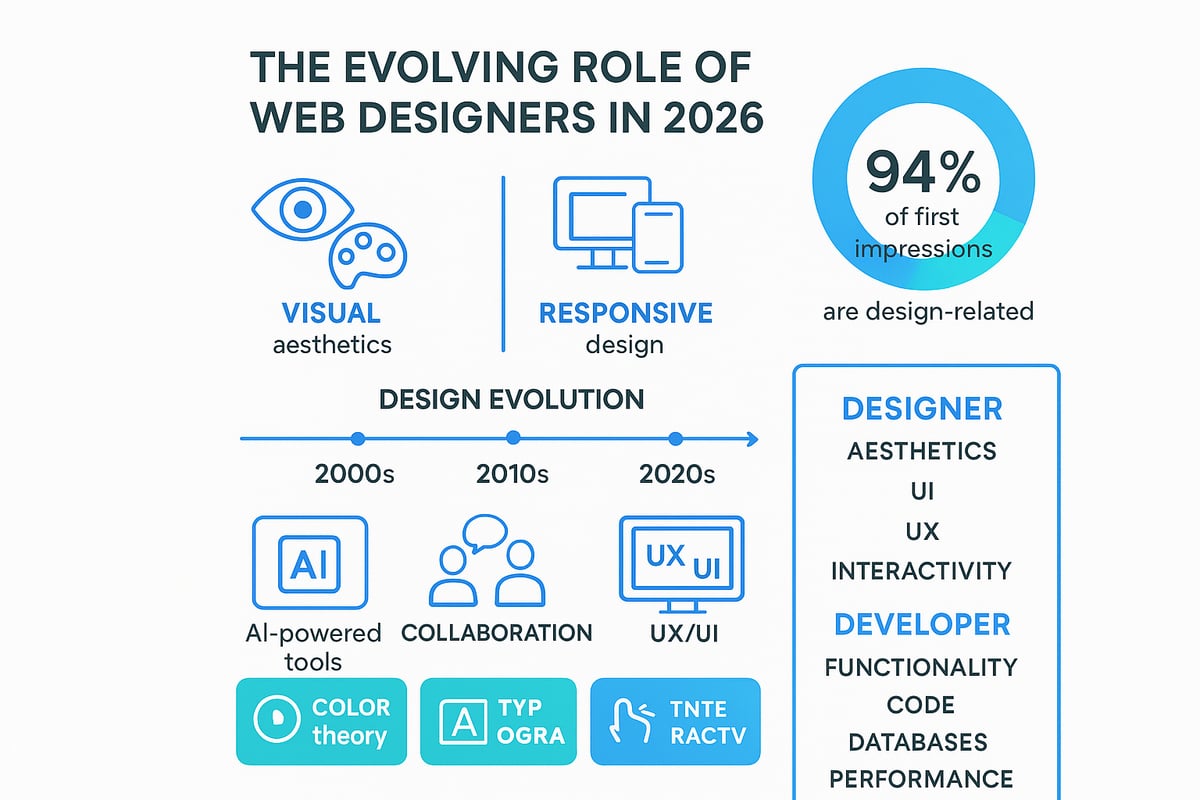
A web designer web developer in 2026 is much more than a visual artist. The focus now extends to ensuring websites are visually appealing, usable, and aligned with a brand’s identity. Responsive and adaptive design is essential, as users access sites from smart devices, wearables, and even AR/VR platforms.
Interactive elements, like micro-animations, are now standard, keeping users engaged and supporting intuitive navigation. Designers contribute to both user experience (UX) and user interface (UI) strategies, collaborating closely with marketers and content teams to deliver a cohesive message. For instance, 94% of first impressions are based on web design, highlighting the importance of the designer’s role.
Designers also use mockups and prototypes to communicate intent with developers. With the rise of high-resolution screens, modern web designers must consider website design for retina displays to ensure crisp visuals across all devices.
Essential Skills for Modern Web Designers
To excel as a web designer web developer in 2026, mastery of core design principles is non-negotiable. This includes a deep understanding of color theory, typography, and composition. Designers are expected to use advanced prototyping and wireframing tools such as Figma and Adobe XD to visualize ideas and test user flows.
A working knowledge of HTML and CSS is crucial for assessing design feasibility and communicating effectively with developers. The ability to create interactive elements and incorporate animations is increasingly valued.
Staying up to date with web design trends, accessibility standards, and best practices is essential. Strong project management and communication skills enable designers to handle complex projects and work seamlessly within cross-functional teams.
Web Design Tools and Technologies in 2026
The toolkit for a web designer web developer has become more sophisticated. Advanced graphic editors like Adobe Creative Cloud, Sketch, and Figma remain industry standards. AI-powered design assistants now speed up prototyping, generate layout variations, and optimize user experiences automatically.
Responsive design frameworks and comprehensive design systems ensure consistency and scalability across projects. Collaboration tools enable real-time feedback and iteration, making teamwork more efficient.
AI is also used to analyze user behavior, suggest improvements, and ensure accessibility compliance. With these technologies, web designers in 2026 can deliver innovative, user-centric solutions that meet the demands of a rapidly changing digital landscape.
Web Developer in 2026: Role, Skills, and Tools
As websites become more dynamic and complex, the distinction between a web designer web developer remains vital in 2026. Web developers are the architects who turn creative visions into fully functional, interactive sites that power today’s digital world.
Key Responsibilities of Web Developers
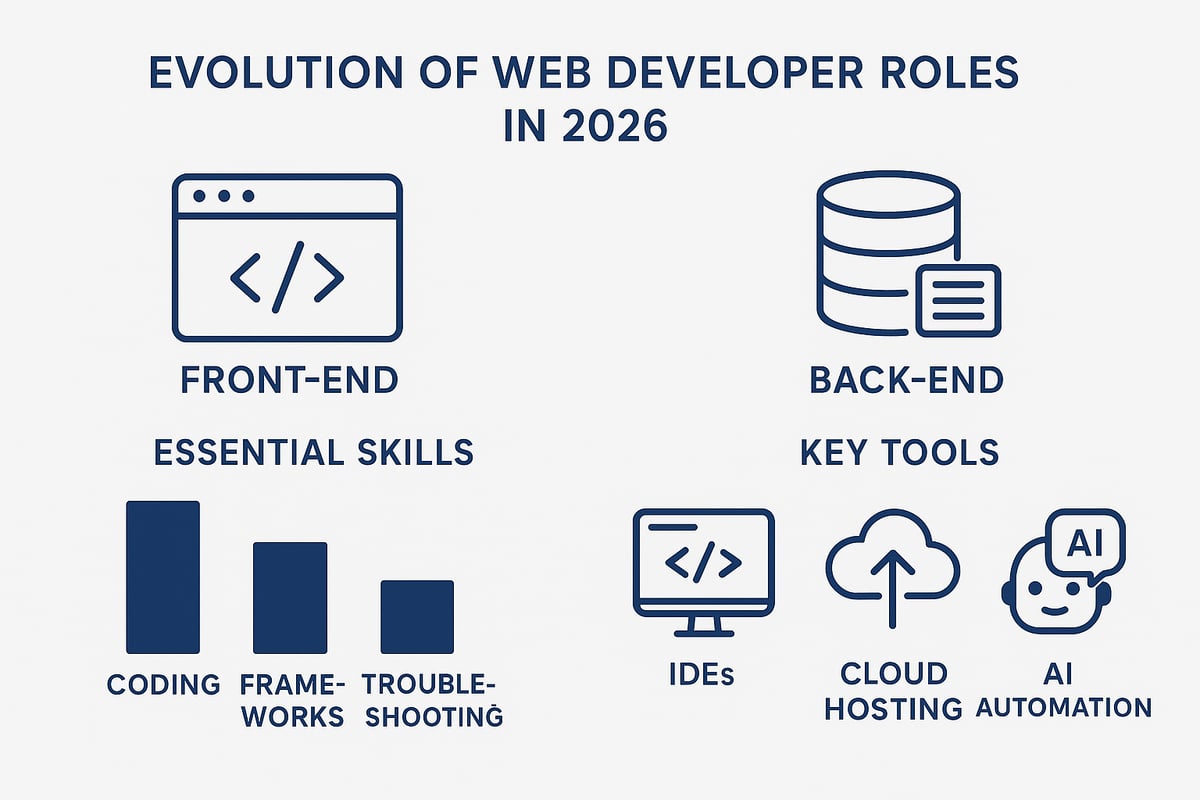
Web developers bridge the gap between design mockups and live websites. Their primary responsibilities in 2026 include:
- Translating UI/UX designs into interactive digital experiences using HTML, CSS, and JavaScript.
- Building robust front-end features with frameworks like React, Vue, and Angular.
- Developing server-side logic, managing databases, and integrating APIs for back-end functionality.
- Ensuring security, scalability, and high performance across all devices and browsers.
- Maintaining and updating websites to adapt to evolving requirements.
For instance, a web designer web developer team is essential when setting up e-commerce platforms, where developers handle payment processing and custom dashboards. Performance is a major focus, and developers are often tasked with optimizing site speed through strategic hosting choices, ensuring seamless experiences for users.
Essential Skills for Modern Web Developers
To excel as a web designer web developer in 2026, certain skills are indispensable:
- Mastery of coding languages: HTML, CSS, JavaScript, PHP, Python, and more.
- Familiarity with popular frameworks, libraries, and content management systems like WordPress and Webflow.
- Strong grasp of SEO best practices and website optimization techniques.
- Proficiency with version control tools such as Git for collaborative workflows.
- Analytical abilities for debugging, troubleshooting, and integrating third-party APIs.
- Effective communication and project management to align with designers and stakeholders.
A modern web developer’s toolkit blends technical acumen with adaptability, allowing them to keep pace with new technologies and shifting project demands.
Web Development Tools and Technologies in 2026
The toolbox for a web designer web developer has evolved rapidly by 2026. Key technologies include:
- AI-powered Integrated Development Environments (IDEs) that suggest and optimize code in real time.
- Continuous integration and deployment platforms for seamless updates and monitoring.
- No-code and low-code solutions for rapid prototyping and minimal viable products.
- Cloud-based hosting and serverless architectures to handle traffic spikes and streamline management.
- Automated testing and bug detection driven by artificial intelligence.
For example, using AI-assisted tools, developers can swiftly identify and fix errors, ensuring projects launch smoothly and efficiently. The ever-expanding range of platforms and automation options means developers can focus more on innovation and user experience than repetitive tasks.
Core Differences: Web Designer vs Web Developer
Understanding the core differences between a web designer web developer is essential for anyone considering a digital project or career in 2026. While the roles often overlap, each brings unique strengths and approaches to the table.
Primary Focus and Approach
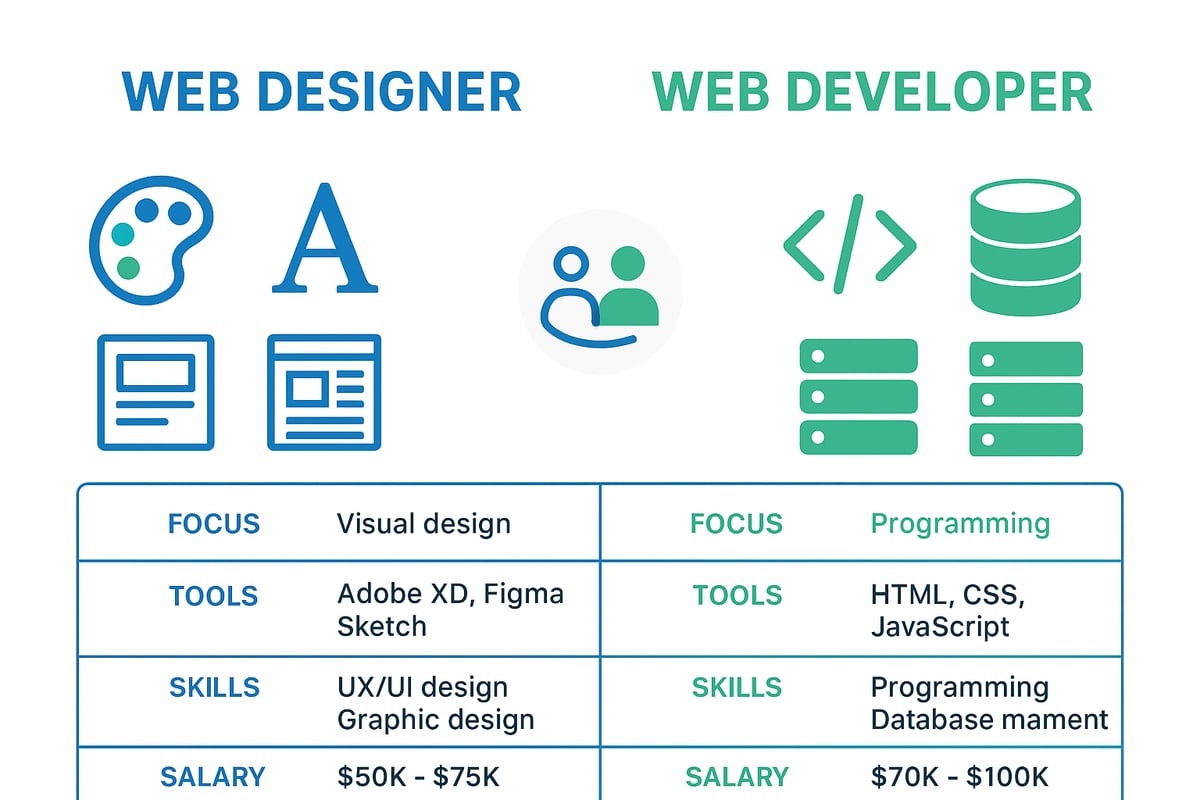
At the heart of the web designer web developer distinction is their primary focus. Designers concentrate on creating visually appealing, user-friendly interfaces that align with brand identity. Developers, on the other hand, transform these designs into interactive, high-performing websites.
Designers work with layouts, color schemes, and graphics, while developers write the code that brings these visuals to life. For a deeper dive into how these roles differ and complement each other, check out this Web Design vs Web Development Differences (2026) resource.
Skills and Expertise Comparison
A web designer web developer must each master unique skill sets. Designers excel in creative problem-solving, design thinking, and UX/UI principles. Developers rely on logical reasoning, coding, and database management.
Despite these differences, both roles benefit from understanding the other's domain. This shared knowledge fosters effective collaboration, ensuring that projects meet both aesthetic and technical standards.
| Role | Core Skills |
|---|---|
| Designer | Color theory, typography, prototyping, UX/UI, communication |
| Developer | Coding, database, security, SEO, troubleshooting |
Tools and Workflow Differences
The tools a web designer web developer uses highlight their distinct workflows. Designers utilize graphic editors, prototyping platforms, and collaboration tools like Figma or Adobe XD to create mockups and prototypes.
Developers prefer integrated development environments, frameworks such as React or Vue.js, and version control systems like Git. Typically, designers hand off their mockups to developers, who then implement and optimize the final product.
Salary and Career Path Distinctions
Salaries and career trajectories for a web designer web developer can vary significantly. Designers in 2025 typically earn between $52,315 and $60,015, while developers command higher averages, ranging from $60,262 to $89,985.
Both roles remain in high demand, but the paths for advancement and required skill sets differ. Designers may move into UX strategy or creative direction, while developers can pursue roles in full-stack development, architecture, or technical leadership.
Real-World Scenarios Illustrating the Divide
The web designer web developer split becomes clear in practice. In an e-commerce project, designers craft product galleries and engaging layouts, while developers build shopping carts and integrate payment systems.
During a website redesign, designers refresh visuals and user flows, and developers ensure the new design works seamlessly with back-end systems. Understanding when to leverage each role leads to more successful outcomes for any web project.
Collaboration and Overlap: When Designers and Developers Work Together
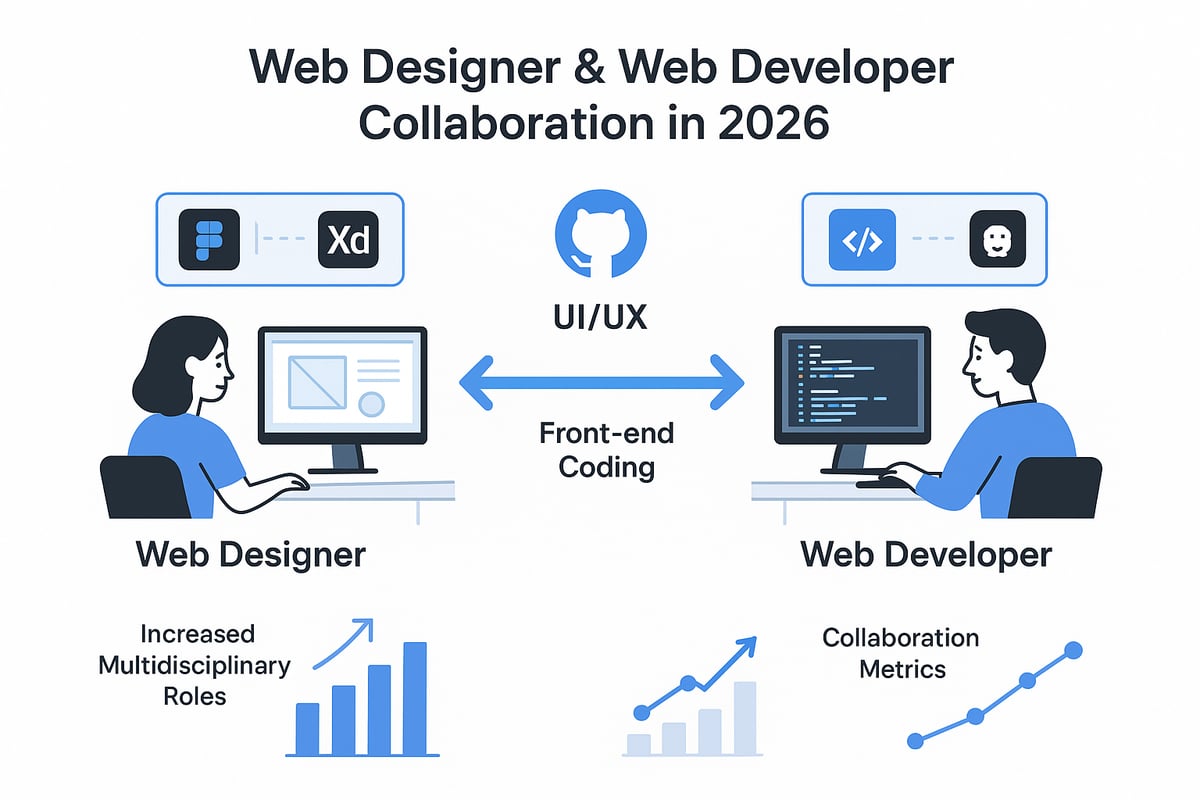
In 2026, the success of any digital project depends on how well a web designer web developer team collaborates. Seamless interaction between creative and technical minds ensures every website not only looks impressive but also functions flawlessly. Early involvement of both roles is now a standard, allowing for a shared vision and stronger project outcomes.
The Importance of Collaboration
A web designer web developer partnership is the engine behind a modern website. Collaboration goes beyond simply sharing files. It means aligning on goals, discussing user journeys, and ensuring technical constraints are understood from the outset.
When both roles are involved early, they can proactively solve potential conflicts. This approach reduces costly revisions and streamlines the entire build process.
Areas of Overlap and Blurred Lines
Today, the boundaries between web designer web developer are less defined than ever. Front-end developers often implement interactive UI elements, while designers are learning to code basic prototypes.
No-code and low-code platforms also contribute to this overlap. These tools empower designers to create functional elements, while developers can focus on more complex integrations. The result is a faster, more agile workflow.
Communication and Handoff Best Practices
Effective communication is vital for any web designer web developer team. Clear documentation, shared design systems, and collaborative platforms like Figma or Zeplin help bridge the gap. Agile workflows with regular check-ins ensure everyone stays on the same page.
For enhanced user experience, following Best practices for designing a breadcrumb trail can exemplify how designers and developers work together on navigation. Real-time feedback, version control, and transparent processes further smooth the transition from design to development.
Common Challenges and Solutions
Collaboration is not without its hurdles. Misalignment on requirements or technical limitations can cause delays. Accessibility and performance expectations might be interpreted differently by each role.
To address these issues:
- Establish regular feedback loops
- Hold joint review sessions
- Document accessibility standards and performance benchmarks
Iterative collaboration helps both sides deliver a more cohesive result.
The Rise of Multi-Disciplinary Roles in 2026
By 2026, demand is growing for professionals who can bridge the web designer web developer gap. These multi-disciplinary experts, sometimes called "full-stack designers" or "website creators," bring both creative vision and technical skills to the table.
Teams benefit from individuals who understand design principles and can write code, creating a more efficient and adaptable workflow. Specialization still matters, but hybrid roles are increasingly valuable in a competitive digital landscape.
Choosing the Right Expert: Designer, Developer, or Both?
Selecting between a web designer web developer or both can seem daunting, especially with so much overlap in their roles today. The right choice depends on your project’s needs, timeline, and vision. Let’s break down what you need to know before making your decision.
Factors to Consider Before Hiring
Before you hire a web designer web developer or a full-service team, clarify your project’s core goals. Are you aiming for a standout visual identity, advanced technical functionality, or both? Consider the complexity, timeline, and budget. Simple sites may need just one expert, while complex platforms often require collaboration.
For a detailed breakdown of roles, skills, and salary trends, check out the Web Designer vs. Web Developer: How the Jobs Differ resource.
When to Hire a Web Designer
A web designer web developer is ideal when your focus is on compelling visuals, intuitive navigation, and a strong brand presence. Web designers excel at creating user-centered layouts and engaging graphics. If your project involves rebranding, launching a marketing site, or enhancing user experience, a designer’s expertise will make a significant impact.
- Creating landing pages
- Designing brand assets
- Improving site aesthetics
When to Hire a Web Developer
Choose a web designer web developer when you need advanced features, custom integrations, or backend systems. Developers turn creative concepts into functional websites, handling databases, e-commerce, and interactive elements. If your project requires secure logins, payment processing, or custom dashboards, a developer’s skills are essential.
- Building web applications
- Integrating third-party services
- Ensuring site security
When to Hire Both (or a Full-Service Agency)
For projects demanding both exceptional design and robust development, hiring both a web designer web developer or partnering with an agency is the best approach. This ensures seamless collaboration and a unified vision from start to finish. Agencies often provide end-to-end solutions, saving you time and reducing miscommunication.
Explore web agency services for your project to discover how a combined team can deliver integrated, high-impact results.
Evaluating Skillsets and Portfolios
No matter your choice, always review the previous work of your web designer web developer candidates. Look for portfolios that align with your industry and project scope. Strong communication and a collaborative mindset are just as important as technical or creative skills. Request case studies or references to ensure your chosen expert can deliver on expectations.
Future Trends: The Web Designer and Developer Landscape in 2026
The world of web designer web developer roles is evolving rapidly as technology advances. In 2026, professionals in these fields face transformative shifts that are reshaping how websites are created and maintained.
The Impact of AI and Automation
AI is revolutionizing the way web designer web developer professionals approach their work. Designers now leverage AI for rapid prototyping, personalized user experiences, and generating creative variations. Developers use AI tools for code generation, automated testing, and optimizing site performance. As a result, teams can deliver websites faster and with greater precision.
AI-driven workflows also enable smarter decision-making. Both roles benefit from predictive analytics, which helps anticipate user needs and improve engagement. This shift allows experts to focus on higher-level strategy and innovation.
The Rise of No-Code and Low-Code Platforms
No-code and low-code platforms are empowering a wider range of people to build websites. These tools simplify development, making it easier for designers and non-technical users to create functional sites without deep coding knowledge. Developers are freed to tackle more complex projects, while designers can prototype and launch sites quickly.
For more on these trends and how they are shaping the web designer web developer landscape, see Top Web Development Trends 2026: Key Insights & Benefits. The growing popularity of platforms like Webflow and Wix demonstrates how accessible web creation has become.
Demand for Specialized and Hybrid Skills
The demand for specialized roles such as UI/UX designers, full-stack developers, and product designers is increasing. At the same time, hybrid positions are emerging. Professionals who blend creative and technical skills are especially valued.
Examples include designers who can code interactive prototypes and developers with a strong sense of user experience. Teams are seeking talent with a broad understanding of both disciplines to stay competitive.
Evolving Accessibility and Inclusivity Standards
Accessibility is a top priority for every web designer web developer in 2026. New laws and guidelines require websites to be usable by everyone, including people with disabilities. Designers and developers must work together to meet WCAG standards and ensure inclusive experiences.
This focus on accessibility shapes design decisions from the start. Regular testing and collaboration help teams deliver compliant, user-friendly sites that reach a broader audience.
The Expanding Role of Collaboration and Communication
Collaboration between web designer web developer roles is more important than ever. Cross-functional teams, agile workflows, and real-time feedback tools foster seamless cooperation. Effective communication ensures that both creative vision and technical implementation align with project goals.
Cloud-based platforms and remote work make it easier for experts to work together across distances. Continuous learning and adaptability help teams respond to changing requirements and technologies.
Career Outlook and Salary Projections
In 2026, the career outlook for both web designer web developer professionals remains strong. Demand continues to grow, especially for those who stay current with industry trends and technologies. Remote opportunities and global collaboration are expanding the talent pool.
Here is a summary of projected salaries:
| Role | Average Salary (2025) |
|---|---|
| Web Designer | $52,315–$60,015 |
| Web Developer | $60,262–$89,985 |
94% of first impressions are related to web design, and fast, functional sites help retain users. Agencies that blend design and development expertise deliver the best results, highlighting the value of a well-rounded web designer web developer team.
After exploring the distinct roles of web designers and developers in 2026, it’s clear that finding the right expertise can make all the difference in your next digital project. Whether you’re envisioning a visually stunning website, seeking seamless functionality, or needing a blend of both, you deserve a partner who truly understands the evolving landscape. At Selectrum Communications, we combine creativity with technical precision to craft web solutions that elevate your brand and deliver real results. If you’re ready to transform your ideas into an engaging digital experience, Do you have a project in mind? Get a quote now!
Article written using RankPill.
Website Hosting and Maintenance Services: Expert Guide 2026
In today’s digital-first business landscape, the performance, security, and reliability of your website are essential. Yet, too many organizations underestimate how much website hosting and maintenance services influence online success.
Neglecting these services can result in costly downtime, security breaches, and lost customer trust. This expert guide to website hosting and maintenance services for 2026 is designed to give you the clarity you need to make confident, future-proof decisions.
You will discover actionable strategies, current trends, and proven best practices for choosing, managing, and optimizing your website. Ready to safeguard your digital presence and unlock new growth? Let’s dive in.
Understanding Website Hosting: Types, Features, and Trends
In the digital age, website hosting and maintenance services form the backbone of every successful online presence. Without reliable hosting, websites risk downtime, poor performance, and lost opportunities. Yet, many business owners underestimate the importance of choosing the right hosting partner. Understanding the fundamentals is the first step to building a resilient and high-performing website.
The Basics of Website Hosting
Website hosting and maintenance services provide the infrastructure that keeps your website accessible online. A hosting provider stores your site’s files on servers, ensuring visitors can reach your pages anytime.
Reliable hosting is vital for uptime and user experience. If your site is often down or slow, visitors will quickly leave. A common misconception is that all hosting is the same, but differences in quality, features, and support can have a major impact on your business.
Types of Hosting Services Explained
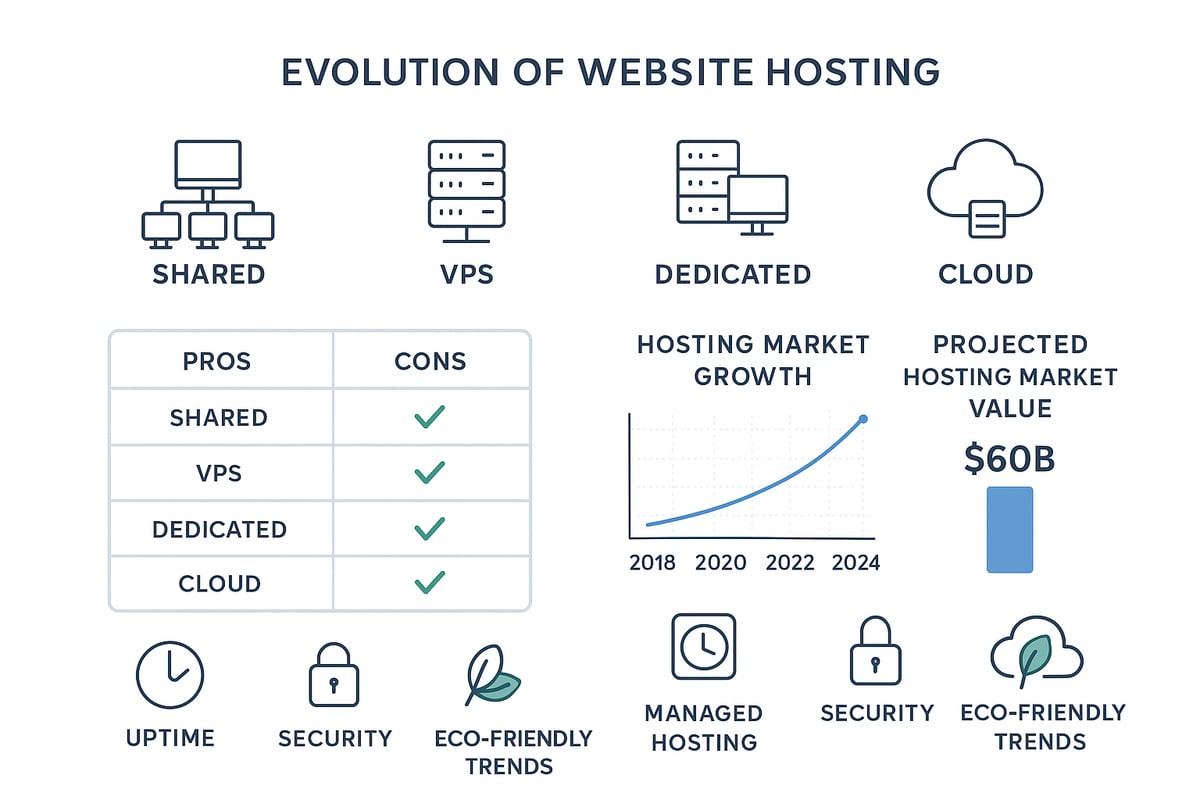
There are four main types of hosting: shared, VPS, dedicated, and cloud. Shared hosting is the most affordable, but resources are split among multiple sites. VPS hosting offers more control and resources, while dedicated hosting gives you an entire server for maximum performance. Cloud hosting is scalable and highly reliable, making it ideal for growing businesses.
Each website has unique needs. For example, e-commerce sites often require more resources than informational websites. To explore more about these options, see the Website Hosting Services Overview.
| Hosting Type | Pros | Cons |
|---|---|---|
| Shared | Low cost, easy setup | Limited resources |
| VPS | More control, scalable | Higher cost |
| Dedicated | Full resources, secure | Expensive, complex |
| Cloud | Flexible, reliable | Variable pricing |
Essential Hosting Features in 2026
When comparing website hosting and maintenance services, focus on features that ensure smooth operation. Uptime guarantees, sufficient bandwidth, and flexible storage are must-haves for modern sites. Scalability allows your hosting to grow with your business.
Security features like SSL certificates, firewalls, and DDoS protection are critical for safeguarding data. Looking ahead, eco-friendly hosting is gaining traction as companies seek to reduce their carbon footprint. Green hosting providers use renewable energy and promote sustainability.
The Rise of Managed Hosting Solutions
Managed hosting is transforming website hosting and maintenance services, especially for small businesses and non-technical users. With managed hosting, the provider handles server management, software updates, and security monitoring, freeing you to focus on your core business.
This approach minimizes technical headaches and reduces downtime. Managed WordPress hosting, for example, has become popular due to its hands-off maintenance and optimized performance.
Hosting Market Trends and Statistics
The website hosting market is expanding rapidly, driven by cloud and hybrid hosting solutions. By 2026, the global market is projected to reach hundreds of billions, reflecting increased digital adoption. Demand for localized data centers is also rising, as businesses seek compliance with data privacy regulations and faster load times for local users.
Cloud hosting and AI-driven management are reshaping the industry, offering greater efficiency and smarter resource allocation. Staying aware of these trends helps you make informed decisions for the future.
The Importance of Website Maintenance: What, Why, and How
Website hosting and maintenance services are the foundation for a robust digital presence. Maintenance is more than a technical chore; it is a continuous process that protects your investment and ensures your website remains reliable, secure, and high-performing.
What is Website Maintenance?
At its core, website maintenance refers to the ongoing process of updating, monitoring, and improving your site’s performance, security, and content. This process goes beyond one-time fixes and involves a consistent schedule of tasks that keep your website running smoothly.
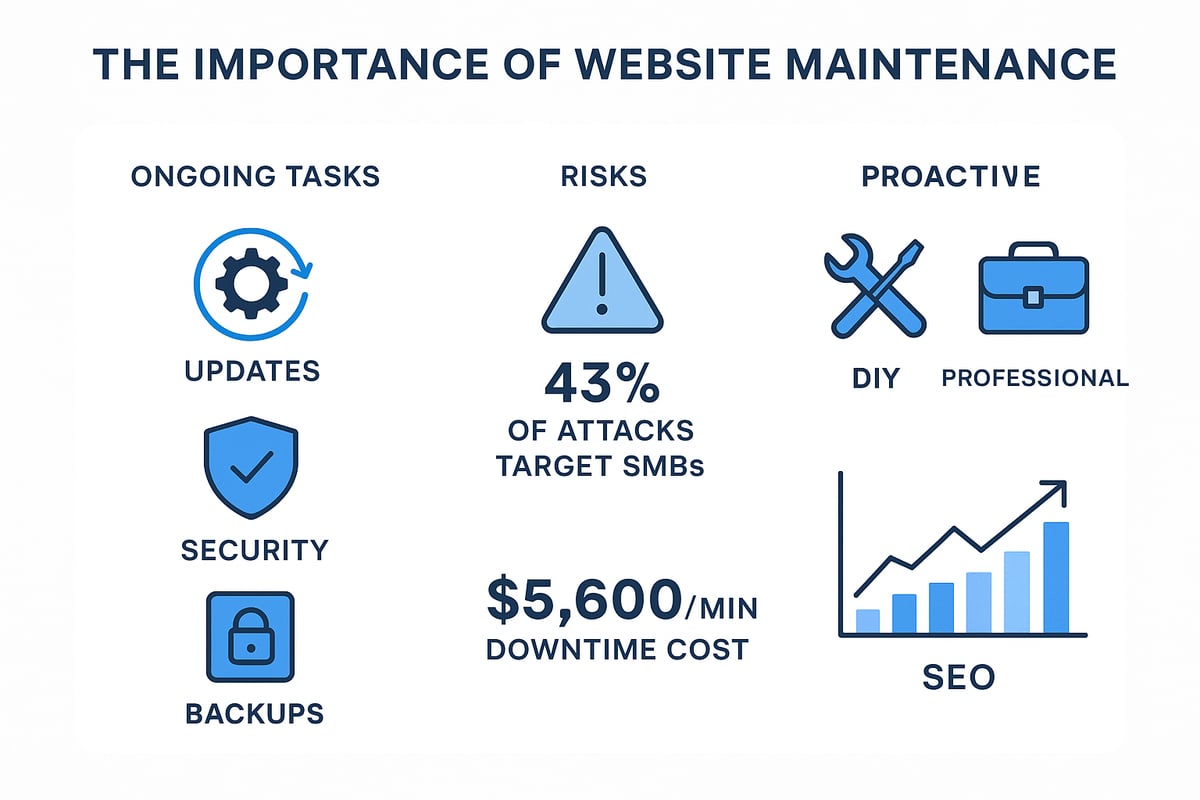
Businesses that prioritize website hosting and maintenance services enjoy fewer disruptions and improved user experiences. Maintenance also covers updates, backups, and security enhancements, ensuring your site adapts as technologies and threats evolve.
Core Maintenance Tasks Every Website Needs
A reliable maintenance plan includes several essential tasks. These range from regular software and plugin updates to robust security monitoring and frequent data backups. Disaster recovery planning is also vital to minimize downtime in the event of an incident.
Content updates and ongoing SEO checks are equally important for visibility and engagement. For a deeper dive into essential maintenance activities, see this Importance of regular website maintenance tasks resource. Consistent website hosting and maintenance services help ensure your site remains secure, compliant, and relevant.
Risks of Neglecting Maintenance
Neglecting website hosting and maintenance services can have serious consequences. Security vulnerabilities are a major concern, with 43% of cyberattacks targeting small and midsize businesses. Downtime is costly, with average losses reaching $5,600 per minute according to Gartner.
Outdated websites also risk losing search engine rankings and customer trust. Regular maintenance is not just best practice, it is essential for protecting your digital assets and brand reputation.
Proactive Maintenance Strategies for 2026
Modern website hosting and maintenance services increasingly rely on automation and AI-driven solutions. Tools now automate updates, monitor security, and alert you to issues in real time. Scheduled maintenance windows minimize disruptions, keeping your website accessible to users.
Predictive maintenance powered by artificial intelligence can identify potential issues before they escalate. Adopting these strategies in 2026 will keep your site ahead of threats and performance challenges.
Maintenance Service Models: DIY vs. Professional
When it comes to website hosting and maintenance services, you have options. Some businesses manage maintenance in-house, which can save costs but requires technical expertise and dedicated resources. Others choose to outsource to professionals, gaining access to specialized skills and proactive support.
The right model depends on your business size, budget, and internal capabilities. Assess your needs carefully to choose the most effective approach for your website’s ongoing health.
Step-by-Step Guide: Choosing the Right Hosting and Maintenance Provider
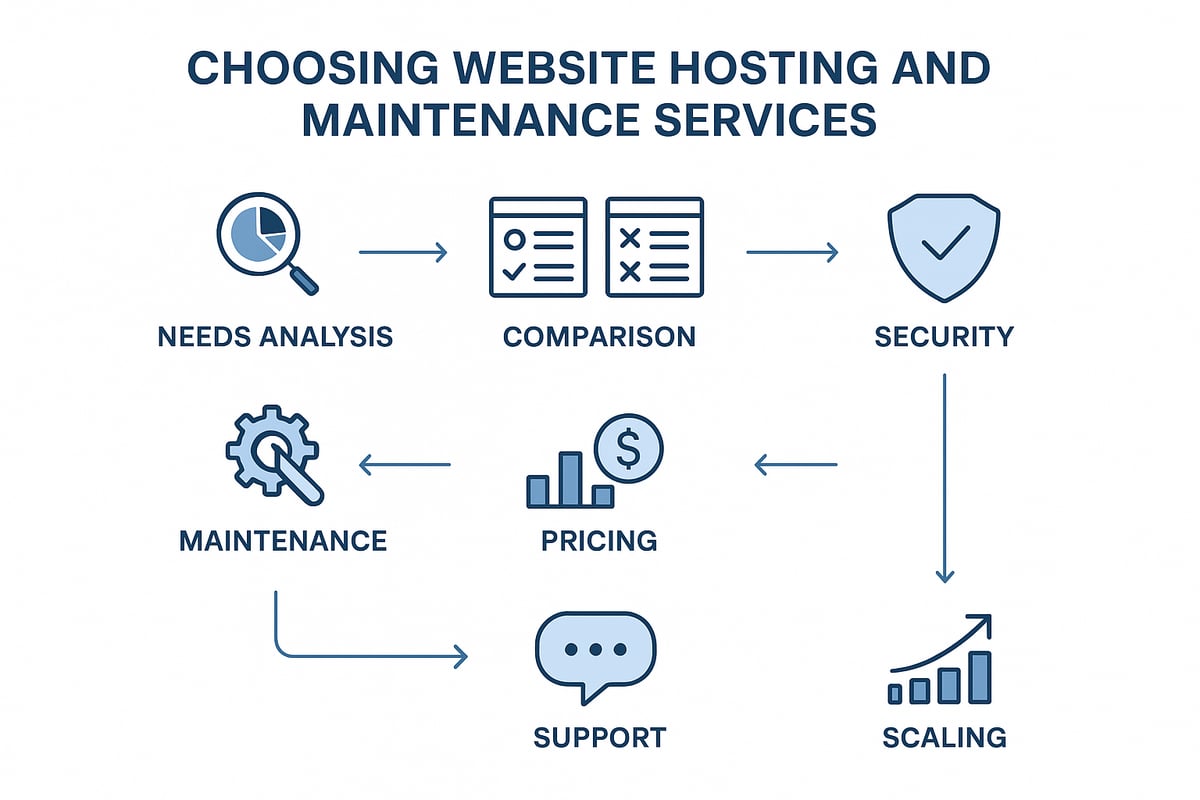
Selecting the best website hosting and maintenance services is a pivotal decision for your online presence. This seven-step guide will help you make a confident, future-ready choice.
Step 1: Assess Your Website’s Needs
Begin by defining what your site requires from website hosting and maintenance services. Consider your current and projected traffic, technical features, and future growth. E-commerce stores, membership portals, and multimedia-heavy sites often need more robust resources. Outline your must-have features and nice-to-have extras, as this clarity will shape your provider shortlist.
Step 2: Evaluate Hosting Options
Compare different hosting types, such as shared, VPS, dedicated, and cloud. Each has unique pros and cons:
| Hosting Type | Pros | Cons | Best For |
|---|---|---|---|
| Shared | Cost-effective | Limited resources | Small sites |
| VPS | Scalable | More expensive | Growing businesses |
| Dedicated | Full control | High cost | Large, complex sites |
| Cloud | Flexible | Variable pricing | Sites with traffic spikes |
Look for uptime guarantees, customer reviews, and transparent SLAs. Prioritize providers with proven reliability and scalability.
Step 3: Scrutinize Security and Compliance
Security is non-negotiable for website hosting and maintenance services. Ensure your provider adheres to data privacy regulations like GDPR or CCPA. Verify their security certifications and protocols, such as SSL, firewalls, and advanced monitoring. Ask about the provider’s approach to vulnerability management and incident response.
Step 4: Analyze Maintenance Offerings
Review what maintenance is included. Does the provider handle software updates, backups, security patching, and proactive monitoring? Evaluate their support responsiveness and escalation procedures. For a deeper look at professional options, explore Security and Maintenance Solutions to understand the range of services available for ongoing protection and performance.
Step 5: Compare Pricing Models and Contracts
Examine whether pricing is pay-as-you-go or fixed package. Watch for hidden fees or sharp renewal increases. Assess contract terms, cancellation policies, and upgrade paths. A transparent cost structure is essential when choosing website hosting and maintenance services. Use comparison tables to weigh the total value, not just the headline price.
Step 6: Test Support and Service Quality
Test each provider’s support before committing. Top-tier website hosting and maintenance services offer 24/7 assistance through live chat, phone, and ticketing. Check response time benchmarks and availability. Responsive support can make a significant difference during urgent issues or planned upgrades.
Step 7: Plan for Migration and Scaling
Ensure your chosen provider offers migration support and can minimize downtime during the transition. Look for easy upgrade paths and flexible resource allocation to accommodate future growth. Reliable website hosting and maintenance services should help you scale seamlessly as your business evolves.
Key Features to Look for in 2026 Hosting & Maintenance Services
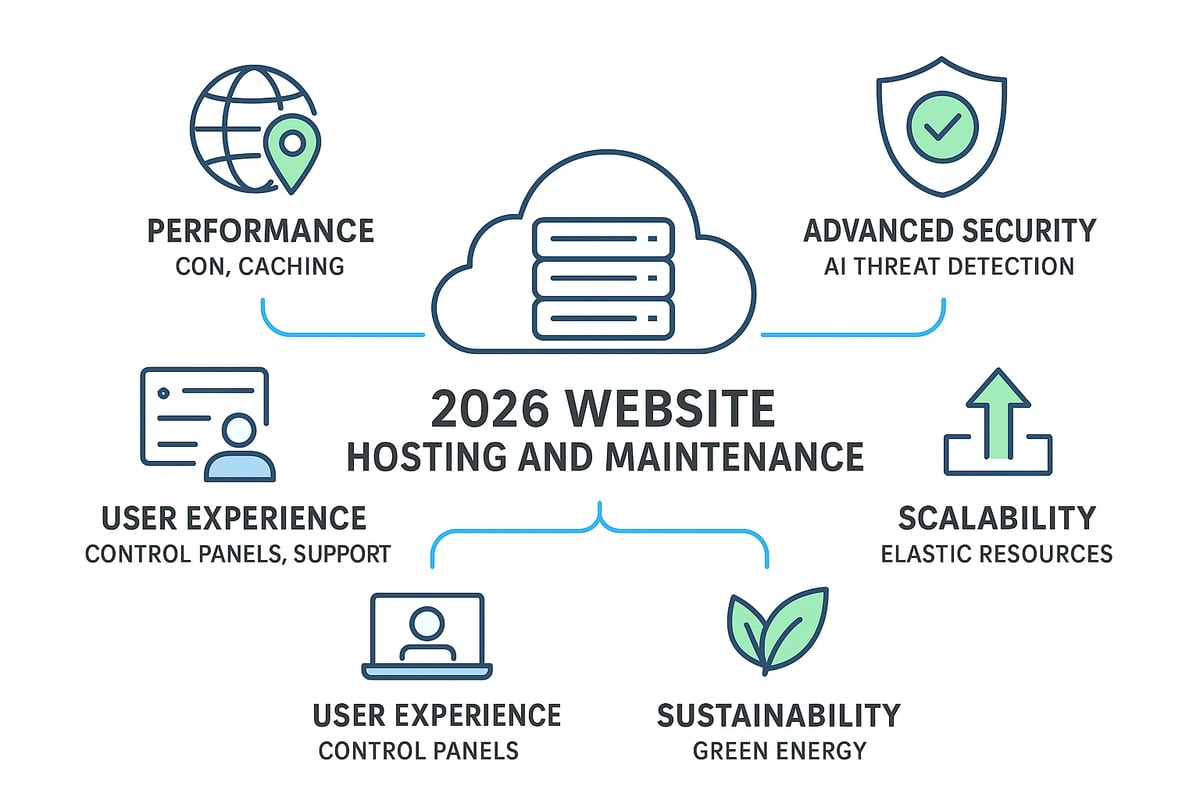
Choosing the right website hosting and maintenance services is essential for future-proofing your online presence. As technology advances, the must-have features in 2026 focus on performance, security, automation, scalability, user experience, and sustainability. Let’s explore what sets the best providers apart.
Performance Optimization Tools
Speed and reliability are non-negotiable for modern websites. The best website hosting and maintenance services include features like CDN integration, advanced caching, and image optimization. These tools ensure your site loads quickly, regardless of user location.
- CDN integration reduces latency
- Caching stores frequently accessed data
- Image optimization improves load times
Sites leveraging CDNs can load up to 50% faster. For a deeper dive, see Optimizing Site Speed with Hosting. Fast-loading sites create better user experiences and support higher SEO rankings.
Advanced Security Measures
Cyber threats are evolving, so robust security is mandatory. Leading website hosting and maintenance services now deploy AI-powered threat detection, multi-factor authentication, and zero-trust architectures. These proactive defenses help block attacks before they impact your business.
- AI-driven threat monitoring
- Multi-factor authentication for admin access
- Zero-trust policies for sensitive data
Explore how AI-driven management is transforming web hosting for enhanced security and operational efficiency.
Automation and Monitoring Capabilities
Automation is a cornerstone of efficient website hosting and maintenance services. Automated backups, uptime monitoring, and instant alerts reduce manual workloads and prevent costly errors. Real-time dashboards provide transparency into site health and performance.
- Automated daily backups
- Uptime and downtime alerts
- Performance dashboards for quick insights
These capabilities enable teams to focus on growth rather than routine site management.
Scalability and Flexibility
Your website needs may change as your business grows. Website hosting and maintenance services must offer elastic resources that scale with traffic spikes, modular add-ons, and pay-as-you-grow pricing. This flexibility supports both startups and established enterprises.
- Elastic server capacity
- Easy upgrade paths
- Modular service options
Scalable solutions ensure your site remains responsive and cost-effective year-round.
User Experience and Support
Intuitive management tools and responsive support define high-quality website hosting and maintenance services. Look for user-friendly control panels, self-service portals, and dedicated account managers for business continuity.
- Simple dashboards
- 24/7 support channels
- Personalized service for business clients
Exceptional support minimizes downtime and builds long-term trust with clients.
Sustainability and Green Hosting
Sustainability is a growing concern for businesses and consumers. Top website hosting and maintenance services use renewable energy, carbon offset programs, and eco-friendly infrastructure. Green hosting providers attract environmentally conscious brands.
- Data centers powered by renewables
- Carbon offset initiatives
- Eco-certifications
Choosing a sustainable provider aligns your digital presence with broader corporate social responsibility goals.
How to Optimize Your Website for Maximum Uptime and Security
Maximizing uptime and security starts with a proactive approach. Whether you run a small business site or a high-traffic e-commerce platform, optimizing your website hosting and maintenance services is essential for reliability and peace of mind.
Regular Performance Audits
Routine performance audits are the backbone of dependable website hosting and maintenance services. Use monitoring tools like Google PageSpeed Insights, GTmetrix, or Pingdom to track load times and server response.
| Tool | Key Feature | Benefit |
|---|---|---|
| PageSpeed | Load speed scoring | Mobile optimization |
| GTmetrix | Waterfall analysis | Detailed diagnostics |
| Pingdom | Uptime monitoring | Real-time alerts |
Identify bottlenecks and address them before they impact your users. Regular audits help you catch slowdowns early, ensuring your site stays responsive and competitive.
Implementing Robust Backup Strategies
A solid backup plan is critical for safeguarding your data. Schedule both full and incremental backups to protect your website from accidental loss or cyberattacks.
Consider using offsite or cloud storage for redundancy and faster recovery. For a deeper dive into this topic, see Why Should I Back Up My Site for expert advice tailored to your needs.
Always test your backups regularly to confirm they work when you need them most.
Keeping Software and Plugins Updated
Outdated software is a leading cause of security breaches. Staying current with core updates, plugins, and themes is a cornerstone of website hosting and maintenance services.
Automate updates where possible, but supplement with manual checks for compatibility. Remember, 52% of breaches stem from unpatched vulnerabilities, making diligence in this area non-negotiable.
Security Best Practices for 2026
Modern security starts with SSL/TLS certificates for encrypted data transmission. Web Application Firewalls (WAF) and DDoS mitigation services add an extra layer of defense, safeguarding your website hosting and maintenance services from evolving threats.
Multi-factor authentication and regular vulnerability scans should be standard. For instance, a business that enabled automated patching and real-time monitoring reduced its incident response time by 60 percent.
Monitoring and Incident Response Planning
Continuous monitoring ensures you are alerted instantly to downtime or suspicious activity. Use real-time dashboards and automated alerts to stay ahead of issues.
Develop a comprehensive disaster recovery plan. Regularly test your incident response strategy so your team can act quickly if a breach occurs. By integrating these steps, your website hosting and maintenance services remain resilient and prepared for any challenge.
As we’ve explored, choosing the right website hosting and maintenance partner is crucial for keeping your digital presence secure, high-performing, and ready for the future. With Selectrum Communications, you’re not just getting technical solutions—you’re gaining a team that understands your brand’s unique needs and is dedicated to your ongoing success. If you’re ready to elevate your website and benefit from expert support, proactive security, and tailored guidance, I encourage you to take the next step.
Do you have a project in mind? Get a quote now!
Article written using RankPill.